Yesterday Wonder I Was
2017
No user ratings available yet
Representation score: 8.9 out of 10
Representation Score
Excellent
2012
Not RatedDirector
Leos Carax
Runtime
115 minutes
Average Rating
No ratings yetNew Showbiz Analysis
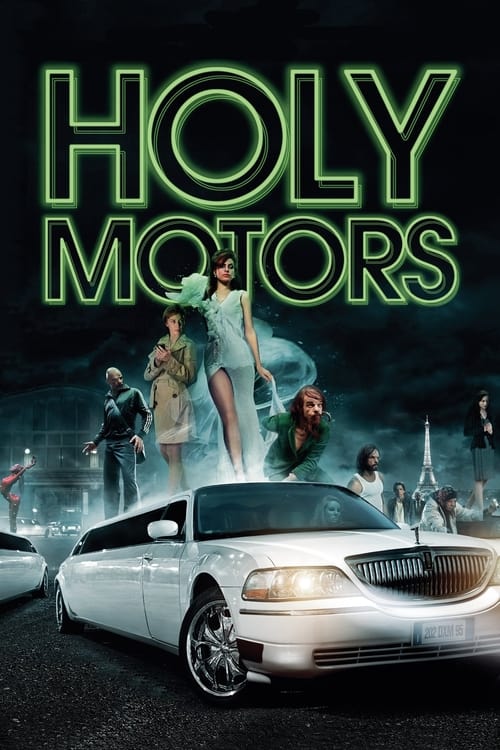
Leos Carax’s *Holy Motors* is a postmodern meditation on the instability of the self. Its strength lies in its intellectual architecture, which uses an episodic structure to deconstruct traditional social roles and gender hierarchies. By treating identity as a series of performative iterations, the film aligns with progressive theories regarding the fluidity of personhood. However, the film lacks traditional demographic breadth. The focus remains heavily on a singular protagonist, which limits the exploration of racial and ethnic diversity. Additionally, while physical transformations occur, they function as surrealist metaphors rather than authentic representations of disability. Ultimately, the film excels at challenging systemic social structures and the concept of a stable identity, even if it does not provide a wide range of diverse lived experiences.
Category Breakdown
The film explores identity through extreme fluidity, disrupting the assumption that everyone is straight or cisgender. While it lacks explicit LGBTQ+ romantic pairings, the protagonist's constant metamorphosis suggests identity is a performative act rather than a fixed essence.
Gender is treated as a transient, performative tool rather than a fixed hierarchy. Oscar moves seamlessly between masculine and feminine presentations, challenging the notion of a natural or dominant gendered role.
The narrative focuses on a singular individual in a surrealist Paris. It lacks significant engagement with racial or ethnic diversity within its episodic structure.
The film critiques traditional Western institutions and the commodification of identity. It presents morality as situational, tied to the specific roles and performances being inhabited.
Physical transformations and monstrous personas serve as surrealist metaphors for digital evolution. These portrayals function as imagery rather than meaningful depictions of lived disability.
Present on Screen
Limited or Absent
Official Synopsis
We follow 24 hours in the life of a being moving from life to life like a cold and solitary assassin moving from hit to hit. In each of these interwoven lives, the being possesses an entirely distinct identity: sometimes a man, sometimes a woman, sometimes youthful, sometimes old. By turns murderer, beggar, company chairman, monstrous creature, worker, family man.
2017

1974

2009

1966

2010
2013
2001

1983
No reviews yet. Be the first to share your thoughts on this movie!
Use the rating form above to leave a star rating and optional review.