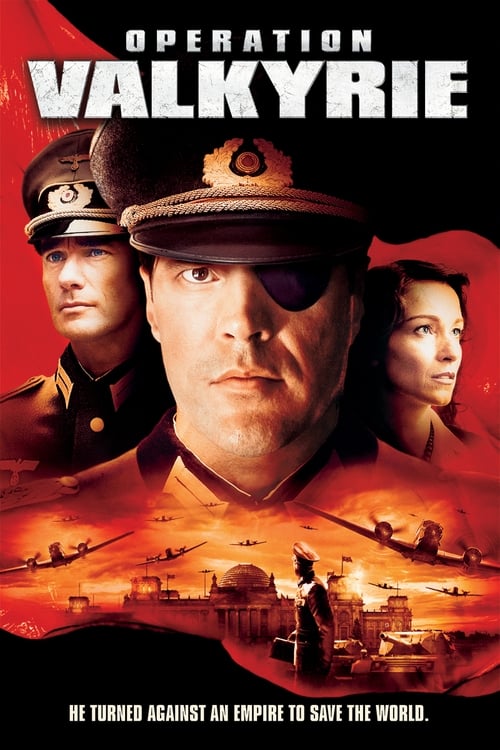
Operation Valkyrie
2004
No user ratings available yet
Diversity score: 2.4 out of 10
No Poster Available
2005
Director
Riccardo Milani
Runtime
136 minutes
Average Rating
No ratings yetSynopsis
Cefalonia tells the real story about what happened in September 1943 on the Greek island of Kefalonia (Cefalonia in Italian), when the 12,000 men in the Italian 33rd Acqui Infantry Division, following Italy's surrender to the Allied, refused to put themselves under German command and also refused to surrender their weapons. The local German force, supported by Stuka dive-bombers and additional troops, attacked the Italians and after several days of combat the Italians surrendered, having lost 1,300 men. As punishment, the German High Command ordered that all surviving Italians should be executed. Some 5,000 were executed during a week of killings. A handful were rescued by locals and the Greek guerrilla, while the rest were shipped off as prisoners, whereof 3,000 drowned when their ships hit mines. The film "Captain Corelli's Mandolin" is based on a novel about the Italian occupation of Cefalonia, but the massacre was much toned down in the Hollywood version.
Overall Score
Limited
Category Breakdown
LGBTQ+ Representation
The film focuses entirely on the masculine experience of military brotherhood and wartime survival. There is no presence of non-cisnormative identities or same-sex intimacy.
Gender Representation
Agency is concentrated among male soldiers, leaving women in secondary roles as romantic interests or victims. The narrative reinforces traditional tropes where combat and leadership are male domains.
Racial & Ethnic Diversity
The cast reflects the Mediterranean geopolitical realities of 1943, focusing on Italian, German, and Greek populations. It remains historically grounded within a Eurocentric demographic.
Religious & Cultural Diversity
The story critiques fascist military structures and the betrayal of the Italian armistice. It frames the German High Command as an oppressive force through a lens of tragic realism.
Disability Representation
Physical trauma and mortality serve as standard genre stakes rather than nuanced explorations of disability. There is no significant focus on neurodivergence or chronic illness.
Strengths
Areas for Improvement
AI Analysis
Cefalonia is a realist reconstruction of historical trauma that prioritizes period accuracy over modern social subversion. It provides an unvarnished look at the 1943 massacre of the 33rd Acqui Infantry Division, yet it adheres to the conventional narrative structures of mid-2000s war dramas. The film's architecture is deeply traditional, centering on male military agency and heteronormative structures. While it captures the friction between Italian, German, and Greek forces, it lacks intersectional depth or diverse identity representation. Ultimately, the work functions as a historical document of human suffering. It succeeds in its historical mission but fails to challenge the era's demographic or gendered limitations.
2004

1975
1984

1978

1997

2016

2012
2005
1993

2008
2022

1970
No reviews yet. Be the first to share your thoughts on this movie!
Use the rating form above to leave a star rating and optional review.