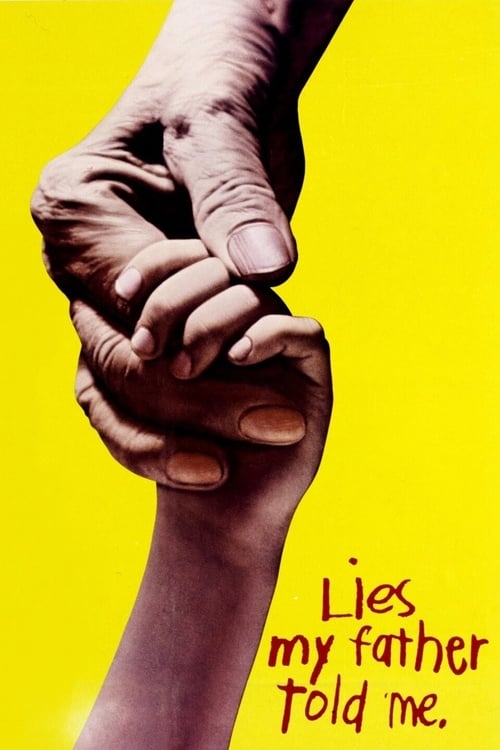
Lies My Father Told Me
1975
No user ratings available yet
Diversity score: 6.3 out of 10

1970
PG-13Director
Ján Kadár
Runtime
106 minutes
Average Rating
No ratings yetSynopsis
Morris Mishkin is a elderly religious Jew in New York. His wife Fanny is very ill. He's a tailor, but he can't work because his back has given out. He doesn't even have enough money for Fanny's medicine. Finally, a black fellow appears from nowhere in the Mishkin kitchen. He says he's an angel from God, sent to help Mishkin. The black angel is even Jewish, named Alex Levine? But will Morris believe in the angel? And can the angel perform the miracle that he promises?
Overall Score
Fair
Category Breakdown
LGBTQ+ Representation
The film focuses on the existential crisis of a religious patriarch. There is no presence of LGBTQ+ characters or narratives addressing non-heteronormative identities.
Gender Representation
The story centers on the male experience of aging and spiritual doubt. While the wife is a central motivation, her role is defined primarily by her illness.
Racial & Ethnic Diversity
Casting a Black man as a Jewish angel provides a powerful subversion of religious iconography. This choice disrupts traditional racial and religious expectations through a radical messenger.
Religious & Cultural Diversity
The narrative explores the friction between traditional faith and the harsh realities of poverty. It prioritizes existential inquiry over the promotion of institutional religious stability.
Disability Representation
The plot centers on the protagonist's debilitating back injury and his wife's illness. These struggles are treated as central elements of the characters' lived realities.
Strengths
Areas for Improvement
AI Analysis
The film stands out for its radical subversion of racial and divine archetypes. By casting a Black man as a Jewish angel, it challenges the visual homogeneity of religious iconography and disrupts mid-century social norms. However, the narrative remains heavily centered on a traditional male perspective. The female presence is largely defined by illness and domesticity, reinforcing conventional gender structures despite the film's progressive spiritual themes. Ultimately, the work succeeds in its nuanced portrayal of physical suffering and socioeconomic hardship. It avoids clichés by focusing on the mundane, heavy realities of chronic struggle and faith.
1975

1989

2017
1988
1982
1999

2012

1961
1976
1996

2009
1973
No reviews yet. Be the first to share your thoughts on this movie!
Use the rating form above to leave a star rating and optional review.