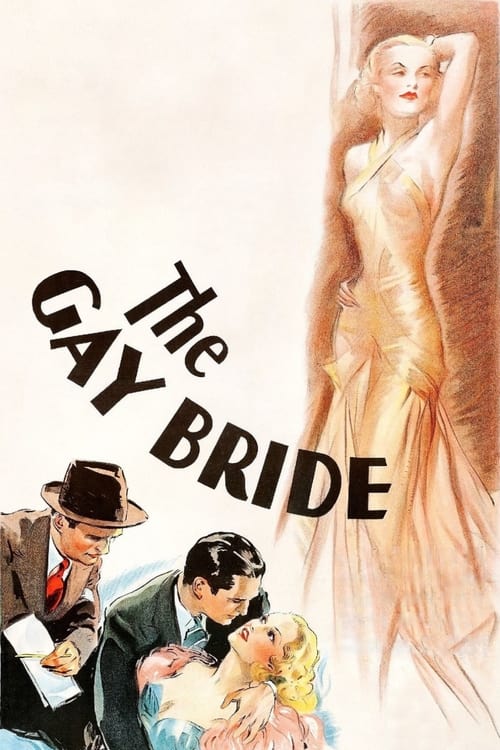
The Gay Bride
1934
No user ratings available yet
Diversity score: 4.5 out of 10

1920
Director
Karlheinz Martin
Runtime
72 minutes
Average Rating
No ratings yetSynopsis
A cashier in a bank in a small German town is alerted to the power of money by the visit of a rich Italian lady. He embezzles 60,000 Marks and leaves for the capital city, where he attempts to find satisfaction in politics, sport, love and religion.
Overall Score
Fair
Category Breakdown
LGBTQ+ Representation
The film focuses entirely on the male protagonist's psychological descent. There is no evidence of non-cisnormative identities or same-sex intimacy within the narrative.
Gender Representation
The story is heavily male-centric, centering on the protagonist's internal disintegration. Female characters remain peripheral or functional, lacking the agency to challenge gendered power dynamics.
Racial & Ethnic Diversity
The cast reflects the homogeneous demographic of early 20th-century Germany. The film adheres to the specific social and aesthetic realities of its historical context.
Religious & Cultural Diversity
The narrative offers a sharp critique of capitalism and religion. It depicts these institutions as hollow, prioritizing subjective experience over traditional social stability.
Disability Representation
While no physical disabilities are featured, the Expressionist style serves as a metaphor for mental instability. Jagged sets externalize the protagonist's mounting paranoia.
Strengths
Areas for Improvement
AI Analysis
Karlheinz Martin’s work is a landmark of German Expressionism, prioritizing psychological depth over naturalism. The film succeeds as a cultural critique, deconstructing the reliability of capitalism, politics, and religion through the protagonist's existential crisis. However, the film falls short by modern standards of demographic inclusion. It lacks meaningful representation for LGBTQ+ individuals and maintains a homogeneous racial and ethnic profile consistent with its era. Ultimately, the film's value lies in its subversion of objective reality. It trades traditional moralizing for a fragmented, subjective truth that challenges the rigid social hierarchies of the early 20th century.
1934

1966
1966
1966
1922

1897
1961
1936

1936
No reviews yet. Be the first to share your thoughts on this movie!
Use the rating form above to leave a star rating and optional review.