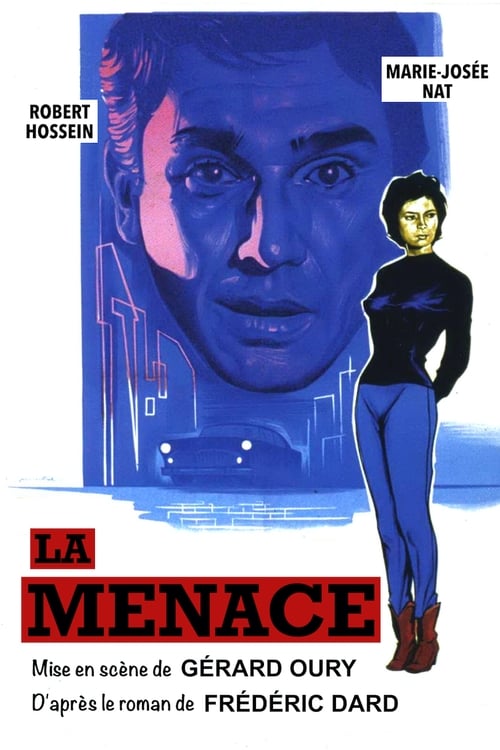
The Menace
1961
No user ratings available yet
Diversity score: 4.3 out of 10

1979
PGDirector
Rudy Durand
Runtime
111 minutes
Average Rating
No ratings yetSynopsis
Tilt is the story of a precocious young girl who is a pinball wizard. Because she does not get on with her parents, Tilt is contemplating running away from home. Skipping school one day, she decides to go to to Mickey's Bar. Mickey, who is Tilt's good friend, helps her set up a gambler for a pinball game. Because the gambler is unaware of Tilt's pinball wizardry, he is easily hustled out of his money. While watching the confrontation, a young man named Neil Gallagher, who is an aspiring musician, is impressed with Tilt's ability, congratulating her after the win. Neil invites Tilt to watch him sing at a rock concert, and after his performance she believes he can become a great singer. Because Neil needs money for a demo tape of his songs, he has an idea of taking Tilt with him and having her hustle would-be gamblers.
Overall Score
Fair
Category Breakdown
LGBTQ+ Representation
The film focuses on the mentor-student relationship between Tilt and Neil. There is no explicit depiction of same-sex intimacy or non-cisnormative identities.
Gender Representation
Tilt is a highly capable protagonist who drives the plot through her technical pinball skills. She subverts traditional roles of female innocence by navigating adult gambling environments.
Racial & Ethnic Diversity
The narrative lacks specific details regarding the racial identities of the cast. The setting suggests an urban environment, but the story appears to follow era-specific homogeneous casting norms.
Religious & Cultural Diversity
The story deconstructs the nuclear family by focusing on a protagonist in conflict with her parents. It frames gambling and hustling as tools for economic survival and empowerment.
Disability Representation
There are no visible or invisible disabilities portrayed within the narrative.
Strengths
Areas for Improvement
AI Analysis
Tilt stands out for its subversion of gendered agency, centering a young girl with specialized technical skills rather than a passive character. This agency allows her to navigate complex, adult-centric social structures. However, the film lacks intersectional depth. The narrative provides no explicit representation of LGBTQ+ identities or diverse racial backgrounds, adhering to more traditional casting patterns of the late 1970s. Ultimately, the film's progressive value lies in its moral relativism. By prioritizing individual ambition and economic survival over traditional domestic stability, it offers a nuanced departure from standard cinematic tropes.
1961

1994

1978

1984
1978

2001

1998
1970

1986

1997

1991

2001
No reviews yet. Be the first to share your thoughts on this movie!
Use the rating form above to leave a star rating and optional review.