
Forbidden Passion
1974
No user ratings available yet
Representation score: 1.8 out of 10
Representation Score
Limited
1966
Director
Juan Orol
Runtime
95 minutes
Average Rating
No ratings yetNew Showbiz Analysis
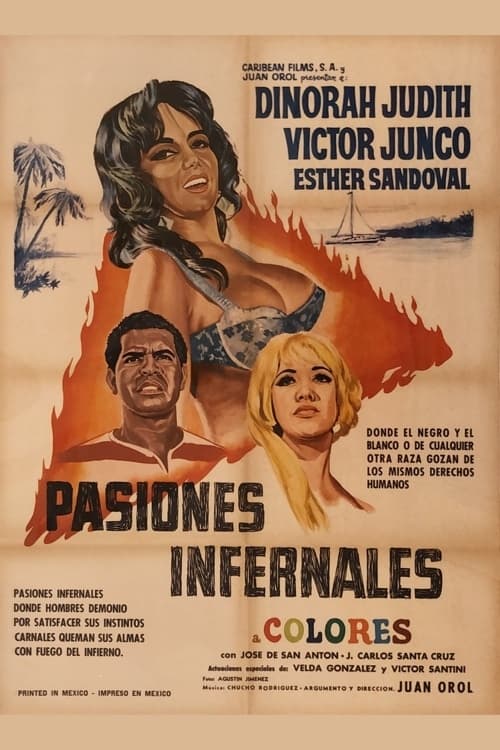
Pasiones infernales is a character-driven melodrama that avoids progressive social changes. It provides a nuanced look at women's ability to drive the story within a restrictive environment. The film highlights Marcia’s control over her own body and romantic choices, challenging the expected submissiveness of women in such settings. However, it remains limited by its reliance on traditional romantic clichés and a lack of multi-layered depth. The Samoan setting serves more as an exotic backdrop for Western-style class conflicts than a meaningful exploration of Pacific culture.
Category Breakdown
The film does not include any characters or situations that suggest LGBTQ+ identities or relationships outside of traditional heterosexual ones.
Marcia challenges traditional gender roles by taking control of her own sensual pleasures and rejecting the wealthiest man on the island, showing she is not just a passive object.
Set in Samoa, the film focuses on interpersonal drama rather than exploring the ability to act of indigenous people. Wealthy elites mirror Western class structures.
The story follows a typical romantic conflict driven by personal vendettas and wealth, without critiquing Western institutions or offering a deeper cultural exploration.
The film does not feature any characters with physical or neurodivergent disabilities.
Present on Screen
Limited or Absent
Official Synopsis
The daughters of the sun are women who meet the erotic needs of pearl fishermen on the island of Samoa. Marcia is the only one of these women who chooses to whom she gives her sensual pleasures. She rejects Mario, the richest man on the island, and falls for his son, Cándido. After he finds out, Mario seeks to jeopardize Marcia by all means to force her to make her his.
1974

1956

1970
1931

1939

1993

1982
1970
No reviews yet. Be the first to share your thoughts on this movie!
Use the rating form above to leave a star rating and optional review.