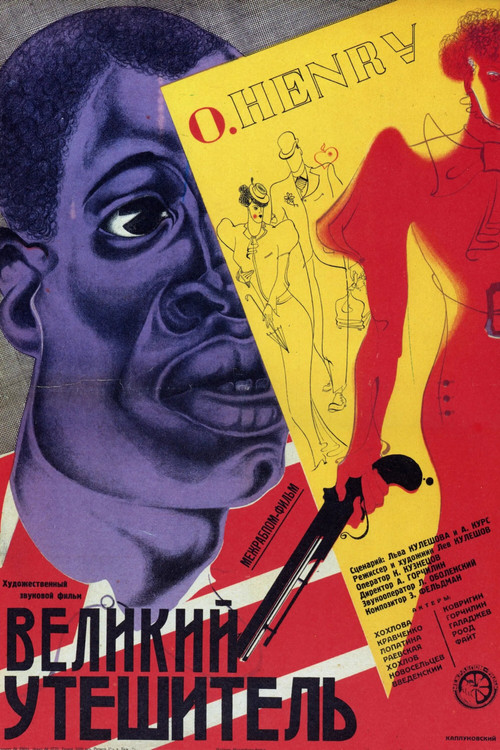
The Great Consoler
1933
No user ratings available yet
Diversity score: 5.5 out of 10

1918
Director
Lev Kuleshov
Runtime
30 minutes
Average Rating
No ratings yetSynopsis
1918 – Lev Kuleshov’s directorial debut. This work is extremely important not only for Russian cinema; it became a landmark in the history of the world’s cinematograph. For the first time a specific method of montage had been used in this film, which came to be known later as “Soviet montage”. Despite the fact that Kuleshov’s films had preceded many discoveries of Vertov and Eisenstein, his works are little known outside Russia. Among his students were Vsevolod Pudovkin and Boris Barnet. In the introduction to Kuleshov’s book The Art of Cinema (1928), his former students wrote: “It was on his shoulders that we crossed into the open sea. We make films – Kuleshov made cinematography…”
Overall Score
Limited
Category Breakdown
LGBTQ+ Representation
The film lacks any evidence of LGBTQ+ characters or non-cisnormative identities. The central plot follows a traditional romantic structure.
Gender Representation
The narrative focuses on a male protagonist's professional and romantic conflicts. The female lead serves primarily as a plot catalyst tied to patriarchal structures.
Racial & Ethnic Diversity
The production context suggests a homogeneous demographic. There is no indication of racial blending or diverse ethnic casting within the industrial setting.
Religious & Cultural Diversity
The film offers a strong critique of capitalist monopolies and industrial hierarchies. It uses technological innovation to challenge established economic power structures.
Disability Representation
There is no evidence of characters with visible or invisible disabilities. No such roles are indicated within the narrative.
Strengths
Areas for Improvement
AI Analysis
Engineer Prite's Project is a period drama that prioritizes systemic and ideological conflict over individual demographic diversity. While the film lacks representation for LGBTQ+ identities, disabilities, or diverse racial groups, it finds strength in its cultural commentary. The narrative uses the tension between peat-powered energy and oil monopolies to critique existing industrial hierarchies. This focus on social and technological reorganization provides a progressive ideological framework despite the limited character variety. Ultimately, the film's impact is rooted in its socio-political themes rather than its portrayal of diverse identities, resulting in a score that reflects high cultural critique but low demographic breadth.
1933
1924

1925
1963

1927
1930

1930

1995

1952
1915

1932
1917
No reviews yet. Be the first to share your thoughts on this movie!
Use the rating form above to leave a star rating and optional review.