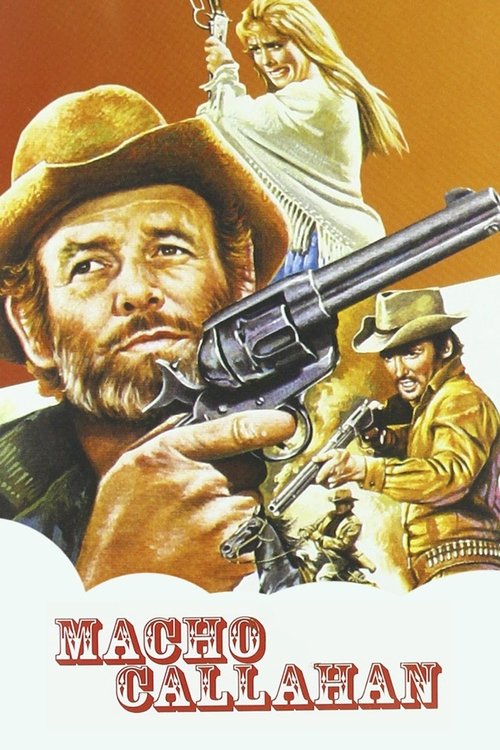
Macho Callahan
1971
No user ratings available yet
Representation score: 0.6 out of 10

Representation Score
Minimal
1961
ApprovedDirector
Edward L. Cahn
Runtime
67 minutes
Average Rating
No ratings yetNew Showbiz Analysis
Gun Street opens with the dry ratchet of a revolver, a sound that establishes the gun not as a tool of justice but as a ticking clock in a small-town office. Directed by Edward L. Cahn, this 1961 B-movie Western sells a vision of law and order where the sheriff is the weary, everyman hero. The film’s argument is straightforward: the community must unite against a violent criminal, and the sheriff’s authority is the stabilizing force. The pictures like the sheriff, treating his competence as the moral center, while the deputy serves as a bumbling foil. The sold meaning is that traditional institutions are necessary and good, with no contradictions in the film’s internal logic. The ending settles the values by affirming the sheriff’s role, leaving him as the isolated but righteous figure. This is a conventional Western that upholds the status quo, with no subversion or critique of its own world.
Category Breakdown
No queer characters or same-sex intimacy appear. The narrative relies exclusively on heterosexual marriage and revenge dynamics typical of the era.
Sheriff Morton is the competent male lead, while Joan Brady serves a standard supporting role. The deputy acts as a bumbling foil, adhering to conventional 1960s gender dynamics.
The cast is entirely white, reflecting the unmarked-majority default of the period. No non-white characters appear, and race is not a narrative element.
The film treats local law as the moral center. The community’s response to the escaped convict is framed as legitimate justice, upholding standard Western institutions.
No characters display physical or mental impairments. The narrative does not engage with disability as a theme or character trait.
Present on Screen
Limited or Absent
Official Synopsis
A sheriff goes in pursuit of an escaped convict who is bent on paying back the people responsible for his imprisonment.
1971
1956

1959
1967
1963
1958
1976
1967
No reviews yet. Be the first to share your thoughts on this movie!
Use the rating form above to leave a star rating and optional review.