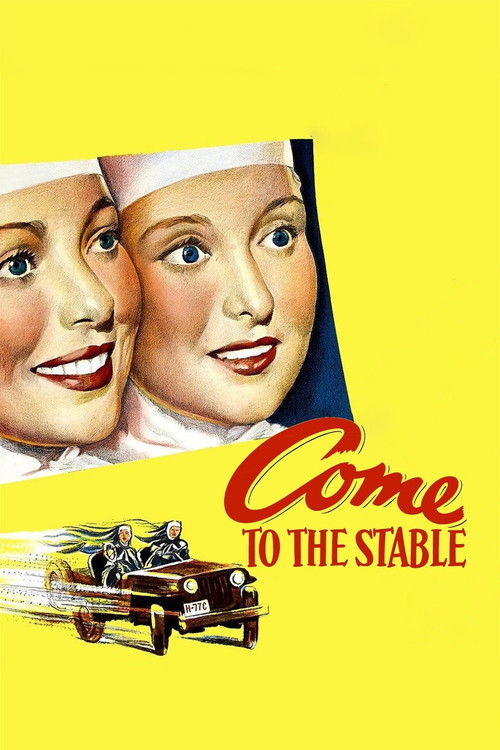
Come to the Stable
1949
No user ratings available yet
Representation score: 1.7 out of 10

Representation Score
Minimal
1955
ApprovedDirector
Henry Koster
Runtime
107 minutes
Average Rating
No ratings yetNew Showbiz Analysis
Good Morning, Miss Dove is a quintessential mid-century character drama that prioritizes the preservation of traditional social hierarchies. While the film centers on a female protagonist, its narrative architecture is designed to affirm rather than deconstruct 1950s social norms. The production reflects the era's conventional studio system, focusing on traditional character studies. It functions as a portrait of a stable, homogeneous community where authority and social order are celebrated. Ultimately, the film lacks systemic disruption or diverse representation, opting instead to reinforce the established cultural and moral pillars of the time.
Category Breakdown
The film operates within a strictly straight-centered framework. There is no discernible presence of non-straight relationships or depictions of same-sex intimacy.
Miss Dove provides a nuanced portrayal of female authority as the community's moral compass. However, her role serves to uphold traditional communal standards rather than challenge social hierarchies.
The setting reflects a homogeneous New England demographic. The narrative lacks characters of color with significant roles, focusing instead on a largely Anglo-Saxon community.
The story reinforces traditional Western institutions and small-town moral structures. It celebrates the cohesive power of established social pillars like religion and the nuclear family.
Miss Dove's illness serves as a conventional narrative device for character reflection. The film lacks meaningful exploration of disability or characters with neurodivergence.
Present on Screen
Limited or Absent
Official Synopsis
Miss Dove is a prim New England school teacher who is treasured by her students in the small town of Liberty Hill. When she falls ill, a kindly doctor, who is a former student of Miss Dove's, comes to her aid. As many of her pupils, present and past, come to see her in the hospital, they reveal how Miss Dove has greatly impacted their lives over the years. These visitors include a police officer, a playwright, a banker, a convict, and an unmarried mother.
1949
1939
1941
1951
1935
1937
1958

1945
No reviews yet. Be the first to share your thoughts on this movie!
Use the rating form above to leave a star rating and optional review.