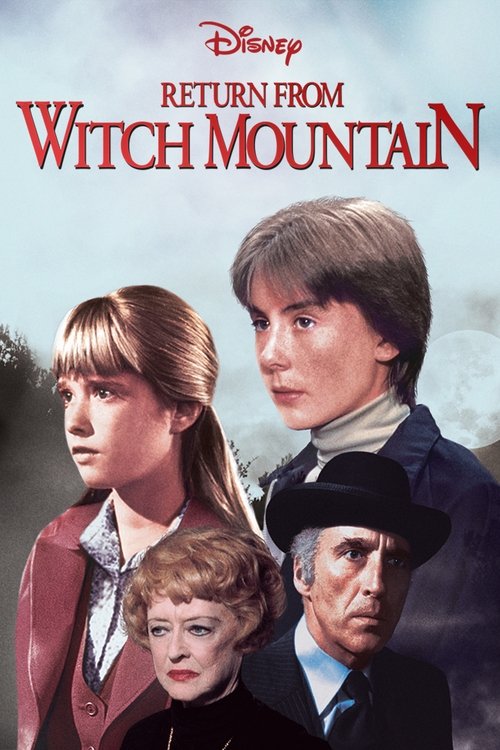
Return from Witch Mountain
1978
No user ratings available yet
Representation score: 6.0 out of 10
Representation Score
Fair
1975
GDirector
John Hough
Runtime
97 minutes
Average Rating
No ratings yetNew Showbiz Analysis
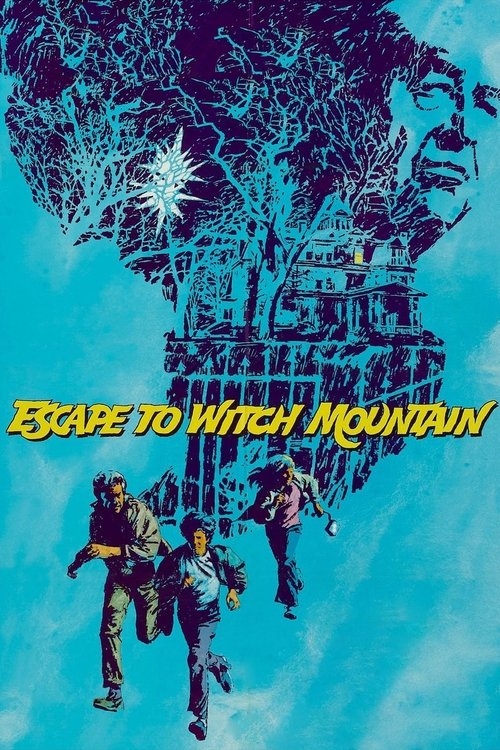
Escape to Witch Mountain stands out for its era by centering biracial children in a high-stakes adventure. By making these protagonists the source of extraordinary power, the film disrupts the homogeneous casting typical of 1970s family cinema. The narrative also offers a subtle critique of institutional authority. It pits the children against a predatory corporate structure, exploring themes of autonomy versus systemic exploitation. However, the film remains anchored in traditional gender dynamics. The protector/ward relationship relies heavily on a masculine figure to provide physical guidance and safety.
Category Breakdown
The film does not include any LGBTQ+ characters or explore non-straight relationships. The interpersonal dynamics revolve around traditional guardian and family roles.
Gender roles follow traditional archetypes, with the adult male serving as the primary protector. Although Tia exhibits telepathic abilities, the power dynamic remains centered on masculine guardianship.
The film is progressive for its time, featuring biracial children as the main characters. This choice challenges the casting norms of the 1970s by giving characters of color significant narrative importance.
The story critiques institutional power and the ethics of scientific exploitation. It portrays predatory organizations as antagonists, emphasizing individual autonomy over systemic oppression.
Telepathic and telekinetic powers are treated as inherent traits rather than burdens. The narrative tension arises from society's efforts to pathologize and control these unique abilities.
Present on Screen
Limited or Absent
Official Synopsis
Tia and Tony are two orphaned youngsters with extraordinary powers. Lucas Deranian poses as their uncle in order to get the kids into the clutches of Deranian's megalomaniacal boss, evil millionaire Aristotle Bolt, who wants to exploit them. Jason, a cynical widower, helps Tia and Tony escape to witch mountain, while at the same time Tia and Tony help Jason escape the pain of the loss of his wife.
1978

1959
1988
1977
1984
1963

2009
1958
No reviews yet. Be the first to share your thoughts on this movie!
Use the rating form above to leave a star rating and optional review.