
Father of a Soldier
1965
No user ratings available yet
Representation score: 3.6 out of 10
Representation Score
Minimal
1944
Not RatedDirector
Keisuke Kinoshita
Runtime
87 minutes
Average Rating
No ratings yetNew Showbiz Analysis
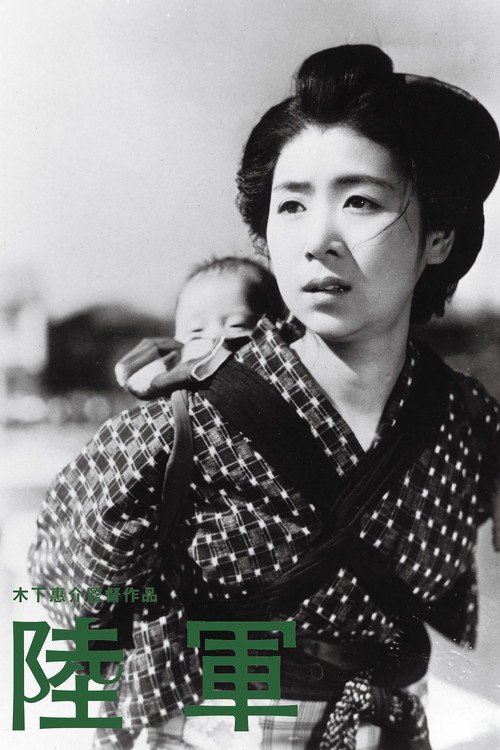
Army is a traditional period drama that upholds established social hierarchies and institutional authority. The narrative centers on duty, military discipline, and the preservation of family traditions, offering little disruption to conventional social norms. The film’s structure revolves around the hyper-masculine framework of the Imperial Japanese Army, which limits representation of non-traditional gender expressions and women's ability to drive the story. While the film maintains historical authenticity through an ethnically homogeneous cast, it does not engage with diverse casting or perspectives that reflect multiple aspects of identity.
Category Breakdown
The film adheres to a strict military structure that assumes everyone is straight and cisgender. It focuses on male camaraderie rather than exploring LGBTQ+ identities.
The narrative emphasizes masculine discipline and suppresses individualistic traits. Female characters have limited roles and there is no challenge to traditional gender power dynamics.
The cast is ethnically uniform, featuring Japanese actors playing Japanese soldiers, maintaining historical authenticity for a domestic production set in the Meiji era.
The film highlights the strength of traditional institutions and the importance of fulfilling family duties. It portrays discipline as essential to national identity.
The protagonist faces health issues, but the film does not explore these conditions in depth. Physical vulnerabilities are presented as obstacles to be overcome by military discipline.
Present on Screen
Limited or Absent
Official Synopsis
Though plagued by ill health all his life, a young Japanese man is obligated to fulfill his family's longstanding military tradition.
1965
1962

1945

1942

1940

1949

1933

2015
No reviews yet. Be the first to share your thoughts on this movie!
Use the rating form above to leave a star rating and optional review.