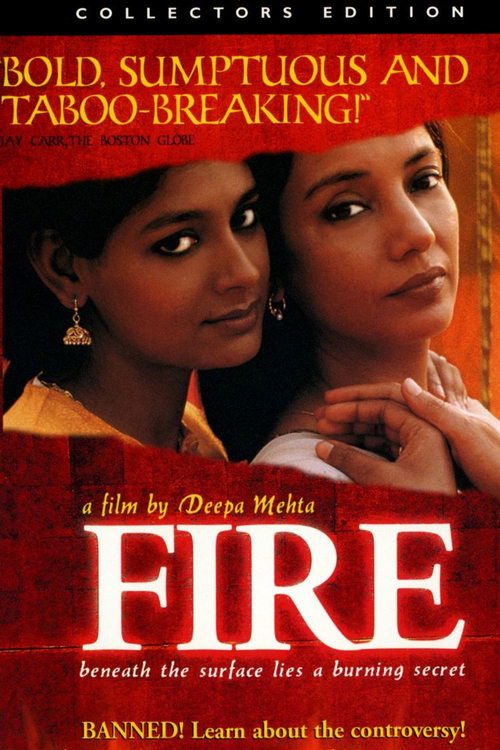
Fire
1997
No user ratings available yet
Representation score: 7.1 out of 10

Representation Score
Limited
1978
Director
Sumitra Peries
Runtime
110 minutes
Average Rating
No ratings yetNew Showbiz Analysis
The film opens on a sun-drenched Sri Lankan landscape, where the heat feels both beautiful and suffocating, immediately establishing a setting that is a cage disguised as a home. *The Girls* sells a romance but delivers a social realist critique of class and gender in post-independence Sri Lanka. The camera lingers on Kusum’s face in moments of exhaustion, treating her suffering as dignified rather than pathetic, while the men discuss politics or medicine in the background. The sold meaning is clear: in a traditional society, individual desire is secondary to the collective’s need for stability. The film’s argument pulls apart when it contrasts Kusum’s competence with her lack of agency. She manages the household and her work with skill, yet her education and modernity do not guarantee freedom; they merely change the nature of the cage. Soma’s wealth buys comfort but not autonomy, as her pregnancy is abandoned by the father, leaving Kusum to care for the child. The traditional patriarchal structure never pays a price; it absorbs the women’s struggles and reasserts itself. The ending is a quiet, resigned acceptance of duty, rewarding endurance and social conformity over individual romantic desire. The moral arithmetic punishes the pursuit of the "modern" self and rewards the preservation of the traditional family unit, leaving the viewer with the image of a woman who has survived by submitting.
Category Breakdown
Absent. The narrative relies entirely on heterosexual pairings and traditional courtship dynamics. No same-sex intimacy or non-heteronormative identity is depicted or discussed.
Kusum is the moral and labor center, yet her agency is constrained by class and family duty. Soma’s pregnancy is abandoned by the father, leaving Kusum to bear the domestic burden. The ending frames female endurance and social conformity as the only viable path, rewarding duty over individual desire.
The cast is exclusively Sinhalese, reflecting the film’s specific rural Sri Lankan context. Class and caste dynamics drive the conflict, but ethnic diversity is absent from the on-screen population. No non-Sinhalese characters appear to challenge or complicate the local hierarchy.
Traditional family structures and social expectations are presented as immutable forces that crush individual ambition. The film critiques the rigidity of these norms by showing the women’s dreams abandoned for duty. The ending affirms the stability of the traditional unit, treating the suppression of the "modern" self as a tragic but necessary cost.
Absent. No characters with physical, sensory, or cognitive disabilities are depicted. The narrative focuses on social and economic constraints rather than impairment.
Present on Screen
Limited or Absent
Official Synopsis
In rural Sri Lanka, two sisters pursue love and personal ambitions despite their family's strict social expectations. As class barriers and financial struggles intensify, both women are forced to abandon their dreams for family duty.
1997

1991

2014

2018
1975

2005
1983
1992
No reviews yet. Be the first to share your thoughts on this movie!
Use the rating form above to leave a star rating and optional review.