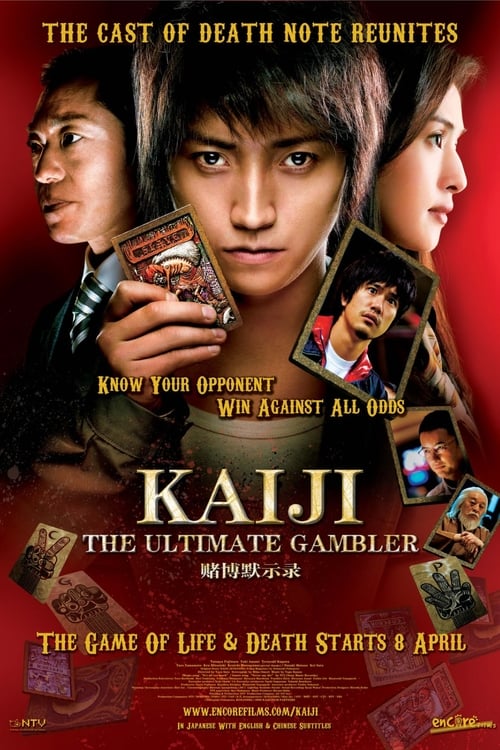
Kaiji: The Ultimate Gambler
2009
No user ratings available yet
Diversity score: 3.9 out of 10

2020
Director
Tōya Satō
Runtime
128 minutes
Average Rating
No ratings yetSynopsis
Kaiji is about to have his life changed. The thrill is beyond anything he, or most people, have experienced. The adventure is not without risk and danger however. He is given four games, which are challenges, and include life and death situations.
Overall Score
Fair
Category Breakdown
LGBTQ+ Representation
The film maintains a narrow focus on the psychological struggles of its primary cast. There is no discernible presence of LGBTQ+ characters or non-heteronormative narratives.
Gender Representation
The narrative exhibits a heavily male-centric perspective centered on underground gambling subcultures. It lacks significant female agency or diverse gender expressions within its masculine-coded environment.
Racial & Ethnic Diversity
The production adheres to a culturally homogeneous Japanese setting. The cast is predominantly composed of individuals reflecting the domestic demographic, offering little ethnic diversity.
Religious & Cultural Diversity
The film excels in its critique of institutional power and predatory capitalism. It portrays organizers as entities that exploit the working class through systemic financial oppression.
Disability Representation
There is no explicit focus on physical or sensory disabilities. The film instead explores psychological vulnerability and the mental strain caused by extreme high-stakes risk.
Strengths
Areas for Improvement
AI Analysis
Kaiji: Final Game is a specialized thriller that prioritizes thematic depth over demographic breadth. It functions as a sharp critique of socioeconomic disparity, focusing on the friction between predatory capitalist structures and marginalized individuals. The film's strength lies in its sophisticated anti-capitalist framework. It successfully subverts traditional social hierarchies by replacing established status with a volatile meritocracy based on psychological survival and intellect. However, the film is limited by a lack of representation across several key identity markers. The narrative space is almost entirely occupied by a masculine-coded environment, leaving little room for diverse gender, racial, or LGBTQ+ perspectives.
No reviews yet. Be the first to share your thoughts on this movie!
Use the rating form above to leave a star rating and optional review.