The Toll Collector
2003
No user ratings available yet
Diversity score: 6.0 out of 10
2014
Director
Daisy Jacobs
Runtime
8 minutes
Average Rating
No ratings yetSynopsis
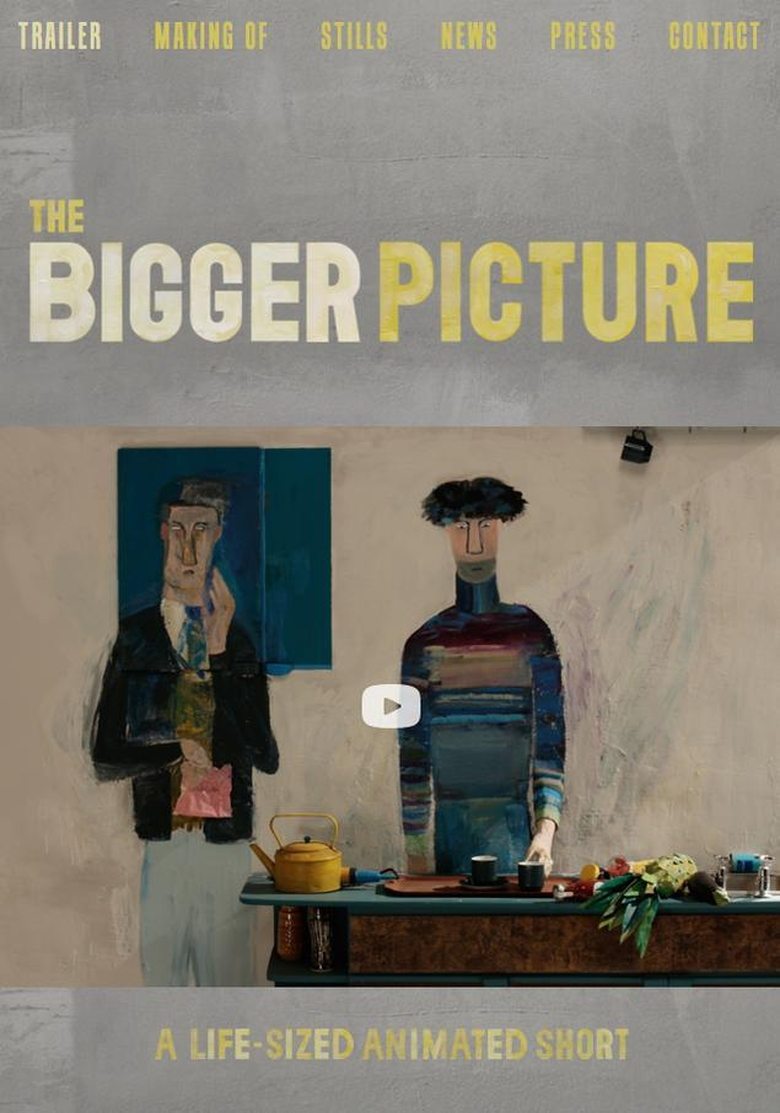
'You want to put her in a home; you tell her; tell her now!' hisses one brother to the other. But Mother won't go, and their own lives quickly unravel as she clings to life. Director Daisy Jacobs uses two-metre-high painted characters in full-size sets to tell the stark and darkly humorous tale of caring for an elderly relative. The Bigger Picture is quite simply the most innovative animated short you will see this year.
Overall Score
Good
Category Breakdown
LGBTQ+ Representation
The film lacks explicit LGBTQ+ characters or non-cisnormative identities. The narrative focuses on universal psychological struggles rather than identity-specific arcs.
Gender Representation
The story centers entirely on female interiority and internal monologue. This approach disrupts patriarchal perspectives by immersing the viewer in a uniquely female psychological landscape.
Racial & Ethnic Diversity
A diverse urban cast reflects a contemporary metropolitan landscape. While the animation abstracts specific features, the multicultural crowd avoids depicting a homogeneous social structure.
Religious & Cultural Diversity
The film critiques modern social structures and the alienation of capitalist urban life. It portrays family dynamics and elderly care as sites of psychological conflict.
Disability Representation
The narrative explores neurodivergence and mental health through the protagonist's social anxiety. It treats her fragmented reality as a complex, subjective experience rather than a trope.
Strengths
Areas for Improvement
AI Analysis
Daisy Jacobs uses large-scale, hand-painted rotoscoping to explore subjective human experiences. The film succeeds by deconstructing social norms and prioritizing individual psychological truth over traditional societal cohesion. The work excels in its portrayal of female agency and its sophisticated critique of modern alienation. By focusing on the protagonist's internal monologue, it challenges conventional cinematic realism and the male gaze. However, the film lacks specific representation for LGBTQ+ identities. While the urban setting feels multicultural, diversity often serves as background texture rather than a central narrative driver.
2003
2017
2006

2015

2018

1975

2013
2015

2013
No reviews yet. Be the first to share your thoughts on this movie!
Use the rating form above to leave a star rating and optional review.