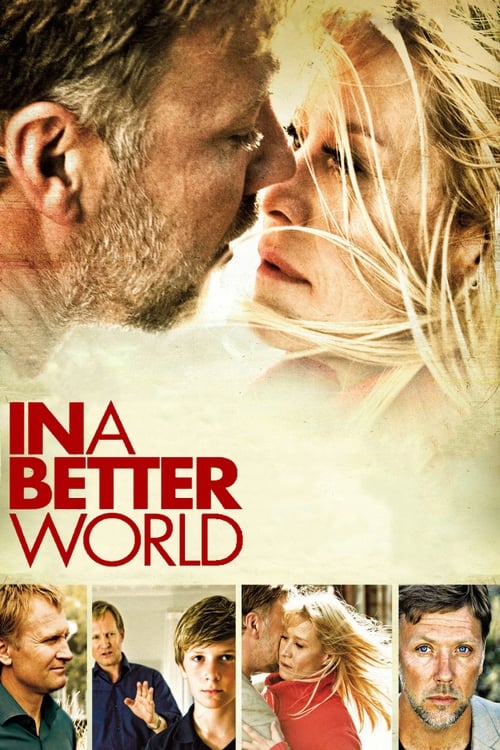
In a Better World
2010
No user ratings available yet
Representation score: 7.5 out of 10

Representation Score
Limited
2006
RDirector
Susanne Bier
Runtime
124 minutes
Average Rating
No ratings yetNew Showbiz Analysis
After the Wedding is a psychological drama that prioritizes interpersonal complexity over diverse representation. It succeeds in challenging traditional gender hierarchies by centering emotional ability to act within female characters. However, the film is limited by its narrow demographic focus, with the narrative remaining deeply rooted in a homogeneous European social circle. Ultimately, the film's strength lies in its exploration of moral relativism, using the breakdown of conventional norms to delve into personal truth.
Category Breakdown
The film focuses on romantic relationships between men and women without including any non-binary gender identities. It operates within a framework that assumes everyone is straight or cisgender.
Female characters play a significant role in driving the narrative resolution through their emotional journeys. While the male lead represents professional success, the women navigate the complexities of restructuring their lives.
The story centers on a white, middle-class Danish social circle. Although there are references to an orphanage in India, the character development remains confined to a homogeneous European setting.
The film deconstructs the idealized Western family unit by portraying it as a fragile construct. It explores situational ethics rather than adhering to a singular moral compass.
There are no visible or invisible disabilities portrayed as central to the character arcs or the progression of the story.
Present on Screen
Limited or Absent
Official Synopsis
A manager of an orphanage in India is sent to Copenhagen, Denmark, where he discovers a life-altering family secret.
2010

1999

2006

2017

1993
2021
2005

2019
No reviews yet. Be the first to share your thoughts on this movie!
Use the rating form above to leave a star rating and optional review.