
Zaza
1923
No user ratings available yet
Diversity score: 1.8 out of 10
1920
Not RatedDirector
Mauritz Stiller
Runtime
106 minutes
Average Rating
No ratings yetSynopsis
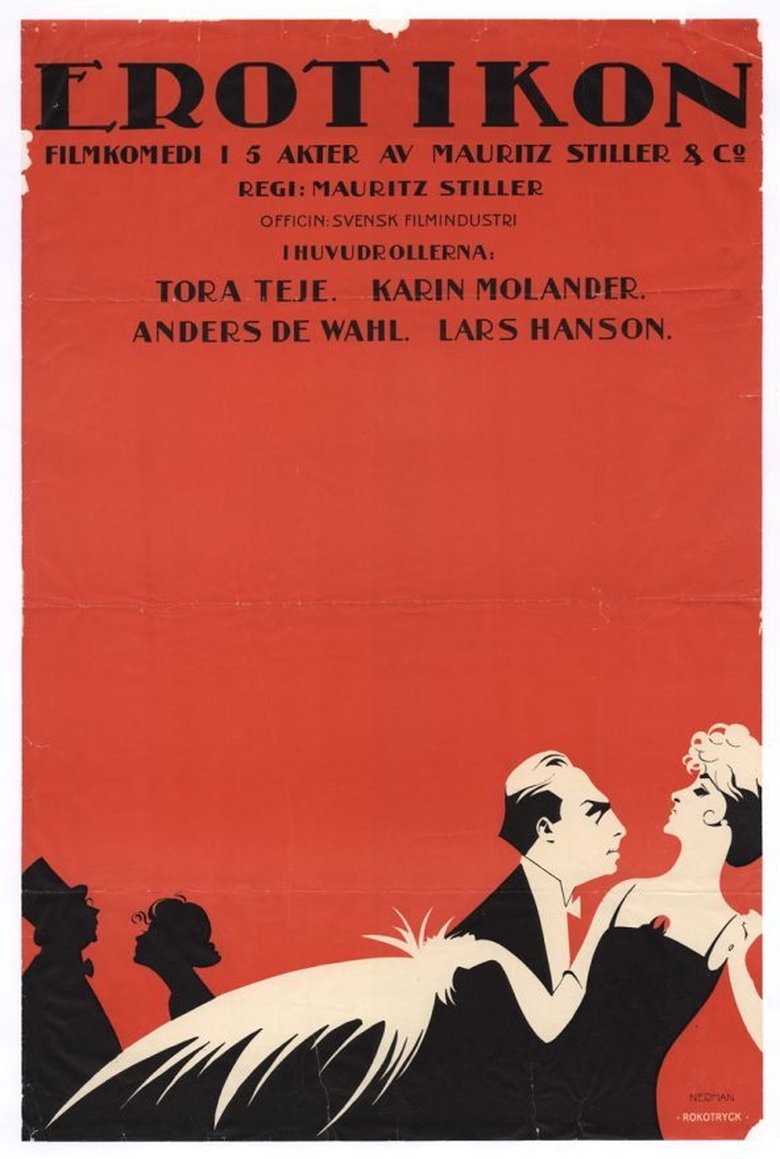
Erotikon is a 1920 Swedish romantic comedy film directed by Mauritz Stiller, starring Tora Teje, Karin Molander, Anders de Wahl and Lars Hanson. It is based on the 1917 play A kék róka by Ferenc Herczeg. The story revolves around an entomology professor obsessed with the sexual life of bugs, and his easygoing wife who is courted by two suitors.
Overall Score
Limited
Category Breakdown
LGBTQ+ Representation
The film adheres to early 20th-century heteronormative structures. Romantic entanglements focus on traditional courtship and marital infidelity without queer subtext.
Gender Representation
The narrative employs a 'battle of the sexes' trope. While the female protagonist navigates suitors, power dynamics remain tied to traditional social expectations.
Racial & Ethnic Diversity
The production reflects the demographic homogeneity of early European cinema. The setting and cast depict a standard high-society European milieu.
Religious & Cultural Diversity
The story functions as a celebration of bourgeois social maneuvering. It reinforces upper-class European values rather than critiquing them.
Disability Representation
No visible or invisible disabilities are portrayed as central to the character arcs or plot progression.
Strengths
Areas for Improvement
AI Analysis
Erotikon is a period-typical social comedy that reinforces the traditional hierarchies of its era. The narrative focuses on romantic pursuit within a homogeneous, high-society European context. While the film shows technical sophistication in its portrayal of social manners, it does not disrupt established gender, racial, or cultural power dynamics. The characters operate strictly within the prevailing social norms of the early 1900s.
1923

1996

1981
1921

1924
No reviews yet. Be the first to share your thoughts on this movie!
Use the rating form above to leave a star rating and optional review.