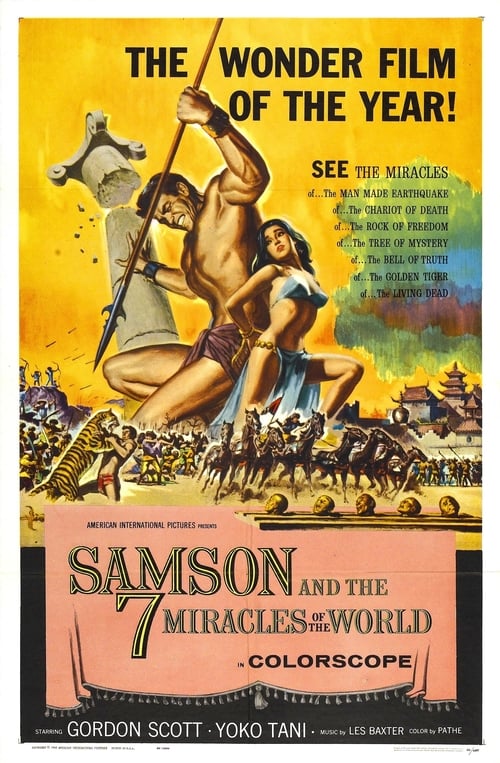
Samson and the 7 Miracles of the World
1961
No user ratings available yet
Representation score: 1.9 out of 10
Representation Score
Fair
1963
Director
Antonio Leonviola
Runtime
90 minutes
Average Rating
No ratings yetNew Showbiz Analysis
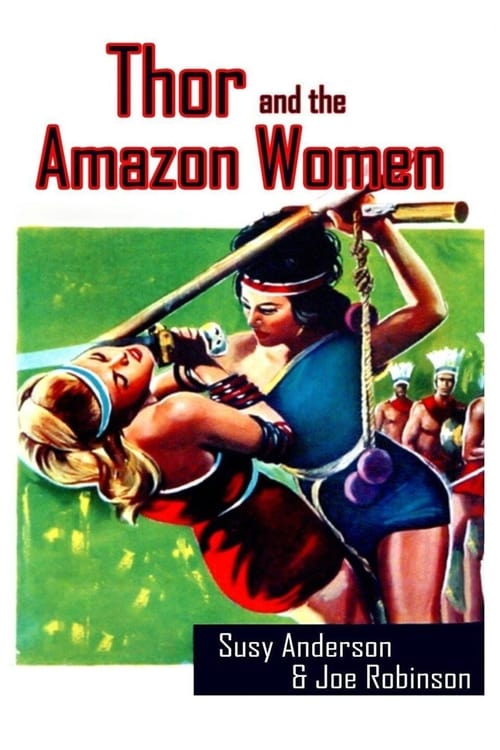
Thor and the Amazon Women stands out for its progressive twist on gender roles. By putting female warriors in powerful positions over men, the film challenges the patriarchal norms common in mid-century fantasy. However, the film's focus on traditional Western mythology limits its cultural and ethnic diversity. This reliance on classical archetypes suggests a narrower scope and less multi-layered complexity. Overall, while the gender inversion is a notable choice for 1963, the lack of visible LGBTQ+ representation and diverse casting keeps the overall score moderate.
Category Breakdown
The film does not explicitly show LGBTQ+ identities or relationships that go beyond the assumption that everyone is straight. The story focuses on a straightforward conflict between the Amazons and a male character.
The movie turns traditional gender roles upside down by putting female warriors in charge with real power. This breaks away from the usual male-dominated structure seen in 1960s adventure movies.
The film sticks to classic European myths using figures like Thor. It doesn't have enough evidence to prove a diverse or non-Anglo-Saxon main cast.
The story looks at power dynamics through themes of conquest and freedom. However, it stays within the bounds of Western mythology rather than questioning Western institutions directly.
The film does not include characters dealing with physical, sensory, or neurodivergent conditions in the story.
Present on Screen
Limited or Absent
Official Synopsis
A race of Amazon warriors is enslaving the men of a country, and the mighty Thor is called upon to help them regain their freedom.
1961
1994

1961
1994
1963
1994
1964
1986
No reviews yet. Be the first to share your thoughts on this movie!
Use the rating form above to leave a star rating and optional review.