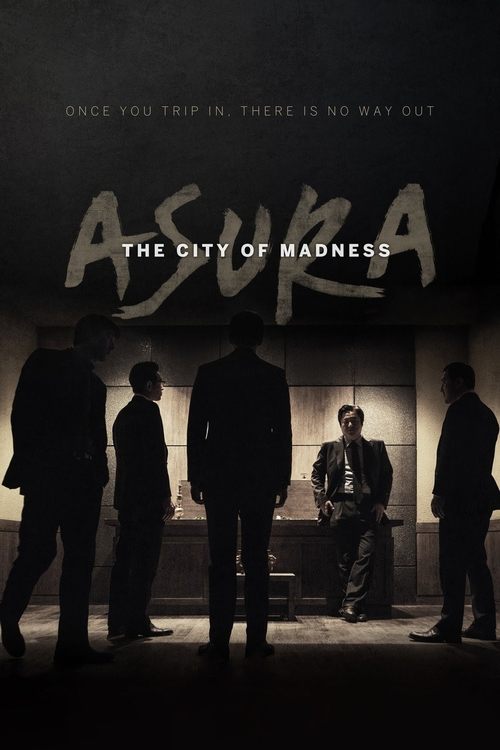
Asura: The City of Madness
2016
No user ratings available yet
Diversity score: 3.4 out of 10

2023
Director
Kim Sung-soo
Runtime
142 minutes
Average Rating
No ratings yetSynopsis
After the assassination of President Park, martial law has been declared. A coup d'état bursts out by Defense Security Commander Chun Doo-gwang and a private band of officers following him. Capital Defense Commander Lee Tae-shin, an obstinate soldier who believes the military should not take political actions, fights against Chun Doo-gwang to stop him. The conflict between the two grows while military leaders are holding their decision and Defense Minister is gone. In the midst of chaos, the spring of Seoul that everyone longed for heads to unexpected direction.
Overall Score
Fair
Category Breakdown
LGBTQ+ Representation
The film operates within a strictly historical and military framework. There is no visible presence of LGBTQ+ characters or narratives exploring non-heteronormative identities.
Gender Representation
The narrative depicts a highly traditional, patriarchal military structure. Women are largely absent from central decision-making processes, reflecting the historical power dynamics of the era.
Racial & Ethnic Diversity
The cast is ethnically homogeneous, reflecting the historical accuracy of the South Korean setting. It avoids race-bending to maintain focus on internal national identity.
Religious & Cultural Diversity
The film excels in deconstructing institutional stability. It portrays the breakdown of command and the corruption of state institutions as a systemic failure of democratic norms.
Disability Representation
There are no prominent characters defined by visible or invisible disabilities. Neurodivergence and chronic illness are not used as central narrative elements.
Strengths
Areas for Improvement
AI Analysis
12.12: The Day is a specialized historical drama that prioritizes political and institutional critique over demographic breadth. It focuses heavily on the masculine hierarchies of military command during a pivotal moment in South Korean history. While the film scores low in traditional metrics like gender and LGBTQ+ representation, it offers a sophisticated cultural analysis. It dismantles the perceived sanctity of state institutions, showing how personal ambition can subvert established social and political hierarchies. The film's narrow demographic scope is a byproduct of its commitment to historical realism, centering the conflict on the specific power dynamics of 1979.
No reviews yet. Be the first to share your thoughts on this movie!
Use the rating form above to leave a star rating and optional review.