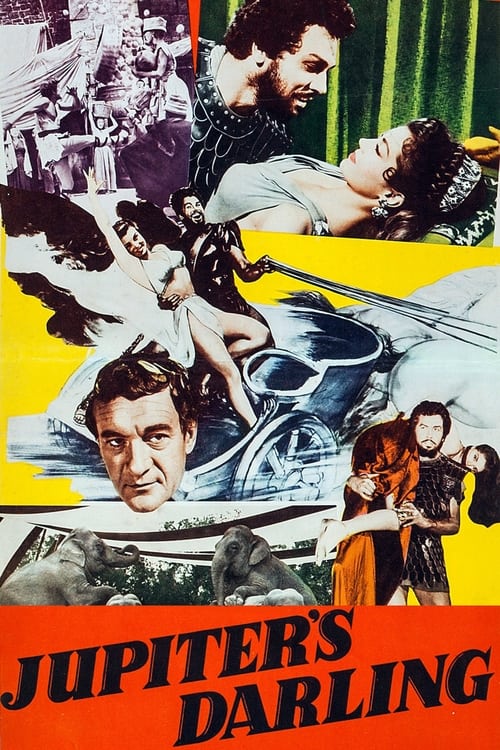
Jupiter's Darling
1955
No user ratings available yet
Diversity score: 1.7 out of 10

1955
NRDirector
Douglas Sirk
Runtime
92 minutes
Average Rating
No ratings yetSynopsis
In 1815, Michael Martin, member of an Irish revolutionary society, turns highwayman to support it, and soon becomes an outlaw. In Dublin, he meets famous rebel "Captain Thunderbolt" and becomes his second-in-command, under the name "Lightfoot."
Overall Score
Limited
Category Breakdown
LGBTQ+ Representation
The film adheres to strict heteronormative standards. The narrative focuses entirely on a traditional romantic subplot between the protagonist and a female lead.
Gender Representation
Gender dynamics follow conventional mid-century archetypes. Gene Tierney's character is defined largely by her social standing and her relationship to the male protagonist.
Racial & Ethnic Diversity
The cast is predominantly white, centering on Anglo-centric protagonists. Local populations serve as atmospheric texture rather than characters with high agency or nuanced development.
Religious & Cultural Diversity
The film explores the friction between personal ethics and formal legal institutions. It uses the outlaw archetype to question the infallibility of institutional authority.
Disability Representation
There are no significant depictions of physical or neurodivergent disabilities within the narrative.
Strengths
Areas for Improvement
AI Analysis
Captain Lightfoot is a mid-century adventure melodrama that prioritizes traditional storytelling over social subversion. While it utilizes the 'wrongful accusation' trope to drive conflict, it remains firmly rooted in the casting and social conventions of 1955 Hollywood. The film's primary strength lies in its subtle questioning of institutional authority. By framing the protagonist as a fugitive fighting an unjust system, it offers a modest critique of legal infallibility. However, these thematic nuances are limited by a lack of diverse representation. The narrative remains centered on white, heteronormative perspectives, and the female lead lacks significant agency outside of her romantic connection to the hero.
No reviews yet. Be the first to share your thoughts on this movie!
Use the rating form above to leave a star rating and optional review.