
Coco
2017
No user ratings available yet
Representation score: 7.3 out of 10
Representation Score
Good
2020
PGDirector
Pete Docter
Runtime
101 minutes
Average Rating
No ratings yetNew Showbiz Analysis
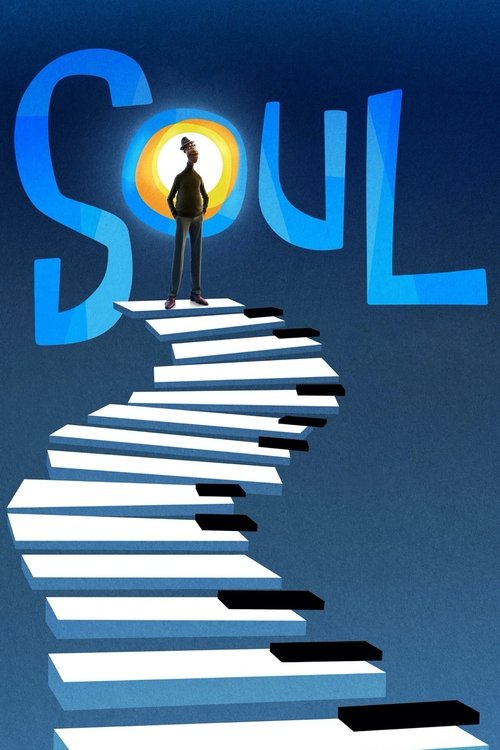
Soul succeeds as a deep exploration of identity, particularly through its strong focus on Black culture and jazz. By avoiding traditional 'struggle' narratives, it provides a rich, empowering portrayal of Black professional life. The film also offers a critical look at achievement-oriented societal structures, replacing the pursuit of a single purpose with a celebration of individual, lived experiences, adding philosophical depth. However, the film remains limited by a lack of LGBTQ+ representation and a focus on male perspectives. While it challenges some masculine hierarchies, the gender dynamics and absence of queer identities prevent a higher diversity score.
Category Breakdown
The film does not include explicit LGBTQ+ characters or stories focused on non-cisgender identities. While the metaphysical setting avoids assumptions about straight relationships, there are no specific markers of queer identities.
The story is mainly driven by male perspectives, focusing on male existential crises. Although Joe shows vulnerability rather than traditional dominance, female supporting characters mostly follow established social roles.
The film stands out by centering Black identity through Joe Gardner’s artistic role in jazz. It avoids typical struggle narratives, instead offering a nuanced, organic depiction of Black professional life and community.
The narrative challenges capitalist ideals by separating personal worth from professional achievements. It promotes an existentialist perspective where the essence of life is found in everyday, non-productive moments.
Through the character 22, the film explores themes related to neurodivergent conditions. Her struggles with navigating sensory and psychological demands serve as a subtle, non-stigmatizing metaphor for neurodivergence.
Present on Screen
Limited or Absent
Official Synopsis
Joe Gardner is a middle school teacher with a love for jazz music. After a successful audition at the Half Note Club, he suddenly gets into an accident that separates his soul from his body and is transported to the You Seminar, a center in which souls develop and gain passions before being transported to a newborn child. Joe must enlist help from the other souls-in-training, like 22, a soul who has spent eons in the You Seminar, in order to get back to Earth.
2017

2000

2009

2017

2021

2021
2021

2021
No reviews yet. Be the first to share your thoughts on this movie!
Use the rating form above to leave a star rating and optional review.