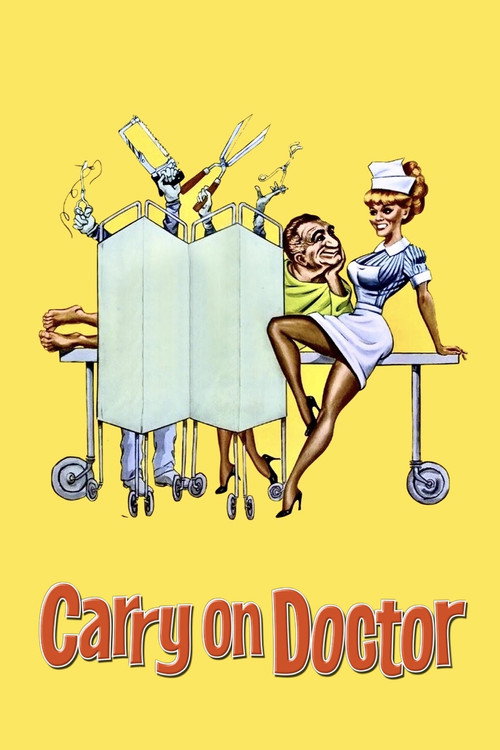
Carry On Doctor
1967
No user ratings available yet
Representation score: 1.6 out of 10
Representation Score
Minimal
1972
RDirector
Rod Amateau
Runtime
85 minutes
Average Rating
No ratings yetNew Showbiz Analysis
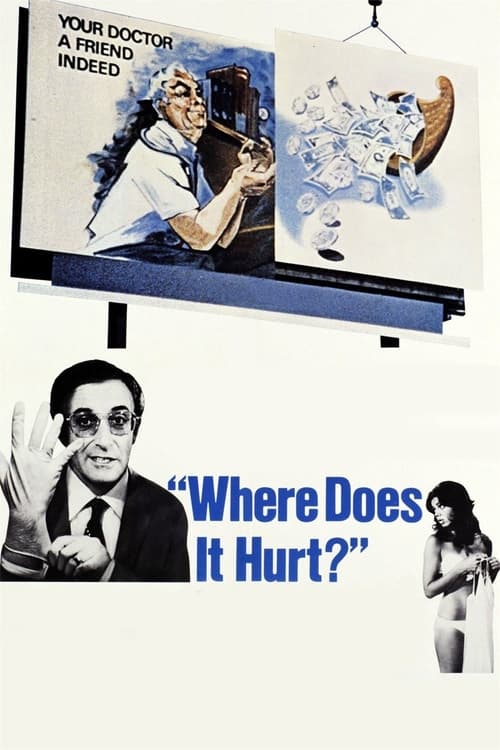
Where Does It Hurt? functions as a traditional character-driven farce centered on the greed of Dr. Albert T. Hopfnagel. The narrative prioritizes a singular comedic performance and slapstick elements over any meaningful social commentary or characters who reflect more than one aspect of diversity. The film relies on established mid-century cinematic clichés, focusing on individual malfeasance within a medical setting. While it critiques professional ethics, it does so through personal corruption rather than addressing systemic or diverse social structures. Ultimately, the production lacks the intentionality required to move beyond the conventional, homogeneous casting and character dynamics of its era.
Category Breakdown
The film does not include any LGBTQ+ characters or stories. The plot revolves around the professional and ethical conflicts between the main character and his assistant.
Alice serves as a moral counterpoint to the protagonist, trying to hold him accountable for his actions. However, she follows traditional comedic roles as the conscience to a chaotic male figure.
The story seems focused on a specific professional environment without showing a diverse cast. It aligns with the homogeneous casting typical of early 1970s comedies.
The film critiques institutional corruption through the lens of individual greed rather than systemic issues. This critique fits the requirements of the farce genre rather than a broader framework.
There is no mention of characters dealing with physical, sensory, or neurodivergent conditions in the film.
Present on Screen
Limited or Absent
Official Synopsis
In this classic hospital farce, Peter Sellers plays Dr. Albert T. Hopfnagel, a greedy, crooked hospital administrator who has perfected the art of bill padding, unnecessary surgery and kickbacks. Mistrusted by patients, and resented by other staffers, his assistant Alice can no longer endure his scams and plots to have him sent to prison - but not for long enough. Sellers again steals the show with an absurd and hilarious character study.
1967
1971
1977

1960
1950

1977
1987
1953
No reviews yet. Be the first to share your thoughts on this movie!
Use the rating form above to leave a star rating and optional review.