Sky Hook
2000
No user ratings available yet
Representation score: 4.8 out of 10
Representation Score
Good
2009
Director
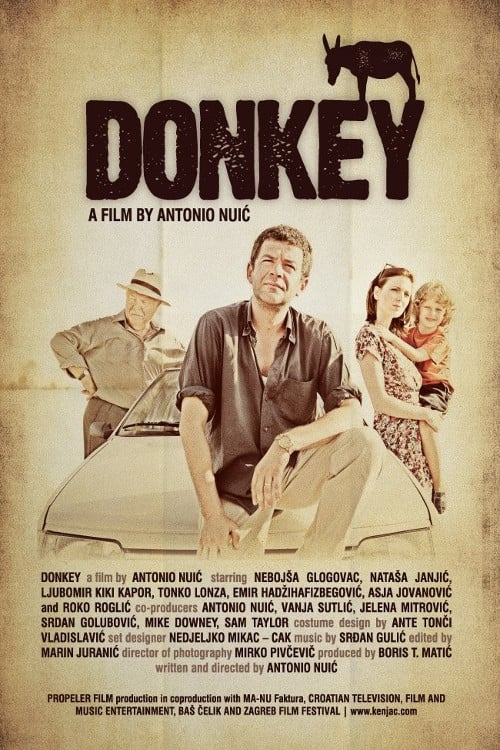
Antonio Nuić
Runtime
90 minutes
Average Rating
No ratings yetNew Showbiz Analysis
Donkey is a psychological drama that avoids the romanticization of war to focus on the fractured identities of a family in transition. It succeeds in breaking down traditional patriarchal hierarchies by presenting a domestic life defined by friction and resentment rather than idealized stability. The film's strength lies in its realistic engagement with disability and the psychological toll of systemic conflict. By centering the narrative on the consequences of war—such as physical injury and territorial loss—it provides a nuanced look at how historical trauma reshapes individual lives. However, the film operates within a relatively narrow demographic scope. The focus on biological kinship and traditional family roles means it lacks explicit LGBTQ+ representation or broader racial the way different parts of someone's identity overlap, keeping the perspective centered on a specific ethnic and straight-centered experience.
Category Breakdown
The film focuses on traditional heterosexual relationships, including a husband, wife, and son. There are no LGBTQ+ characters or non-cisgender identities in this narrative.
The story explores domestic tension through Boro and Jasna's conflicts, but the main role is played by the male protagonist's personal growth and reconciliation.
Set in Herzegovina during a time of intense ethnic complexity, the film explores ethnic belonging and the trauma of displacement within a specific Balkan context.
The narrative challenges idealized family archetypes by showing the domestic sphere as a site of dysfunction and unresolved trauma rather than stability.
The portrayal of Boro's brother, who is wheelchair-bound due to war injuries, serves as a central catalyst for the family's emotional and shifting dynamics.
Present on Screen
Limited or Absent
Official Synopsis
It is 1995. The summer when the war operation Storm will take place. Boro, who is going to be forty in a year and a half, with his wife Jasna and son Luka goes to his home village Drinovci, Herzegovina, after seven years. He wants to see his brother who managed to leave Sarajevo with his family. Boro knew that his brother was wounded, but when he sees him after many years, he discovers that the brother will spend the rest of his life in wheel chair. Boro constantly fights with Jasna, and he doesn't speak at all to his father Pako, whom he blames for his mother's death. In two weeks in August 1995, Boro will solve the years long dispute with his father, he will learn to be a better husband and a father.
2000
2013
1997
1996

1971
1998
2013
2012
No reviews yet. Be the first to share your thoughts on this movie!
Use the rating form above to leave a star rating and optional review.