Find another title
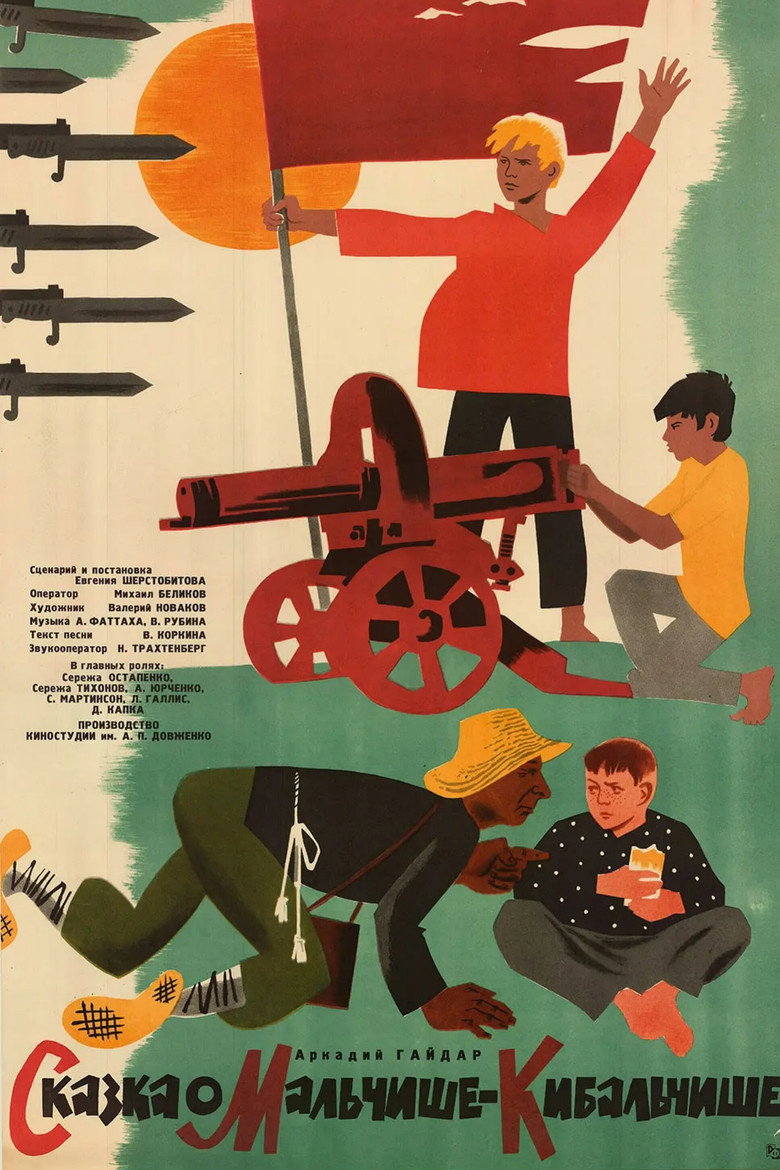
The Tale of Malchish-Kibalchish
1965
Director
Evgeniy Sherstobitov
Runtime
80 minutes
Average Rating
No ratings yetSynopsis
The story is about a brave boy who never takes off his hat.
Where to Watch
Diversity & Representation
Overall Score
Fair
Category Breakdown
LGBTQ+ Representation
The film follows a traditional fable structure without any depiction of non-cisnormative identities. Character dynamics focus on archetypal heroism rather than queer themes.
Gender Representation
The story centers on a singular male protagonist and traditional masculine heroism. Female agency is not a primary driver of the plot or the central struggle.
Racial & Ethnic Diversity
Stylized humanoids and anthropomorphic characters avoid traditional racial stereotypes. However, the film does not actively pursue intersectional representation or specific socio-political nuance.
Religious & Cultural Diversity
The narrative offers a sophisticated critique of power by framing the King of the Monkeys as a corrupt institution. It successfully challenges hierarchical and monarchical structures.
Disability Representation
There are no prominent depictions of physical or neurodivergent disabilities. No such traits serve as significant drivers for the characters or the narrative.
Strengths
- Provides a sophisticated narrative critique of oppressive, centralized authority.
- Uses metaphorical, non-human characters to avoid traditional racial stereotypes.
- Challenges conventional monarchical hierarchies through its anti-authoritarian themes.
Areas for Improvement
- Lacks representation of diverse gender identities or non-cisnormative characters.
- The narrative is heavily centered on a singular male perspective of heroism.
- Does not include depictions of physical or neurodivergent disabilities.
AI Analysis
The film is a product of 1960s Soviet animation, utilizing a fable-based architecture to explore resistance against tyranny. Its strengths lie in its cultural subversion of authority, though it remains limited by the era's demographic storytelling norms. While the film excels at deconstructing oppressive power structures, it lacks modern intersectional markers. The focus on a singular male hero and the absence of diverse identity representations result in a bifurcated score.
Rate this Movie
Reviews
No reviews yet. Be the first to share your thoughts on this movie!
Use the rating form above to leave a star rating and optional review.