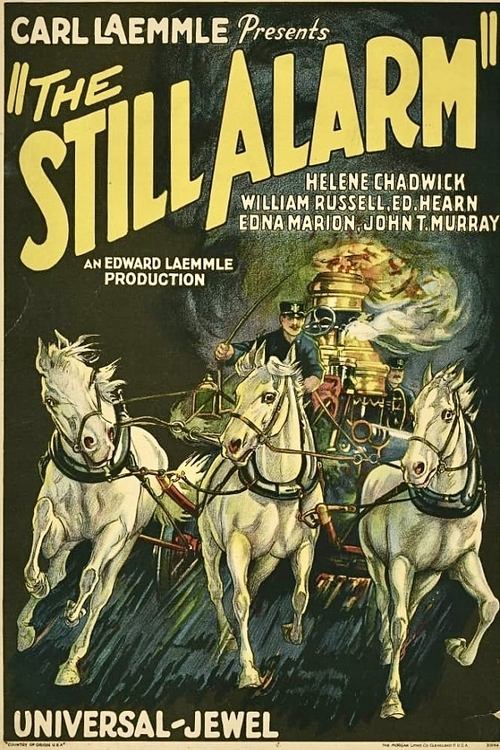
The Still Alarm
1926
No user ratings available yet
Diversity score: 1.3 out of 10

1930
PassedDirector
Emory Johnson
Runtime
79 minutes
Average Rating
No ratings yetSynopsis
The story of the firemen at Engine House No.8, where widower Frank "Dad" Brooks is the beloved veteran and whose children, Milly and Jimmie, are especially fond of firemen Dan and "Beauty" Johnson. The problem of the day is concern whether or not Brooks is going to qualify for a pension...until a three-alarm inferno breaks out at the orphanage.
Overall Score
Minimal
Category Breakdown
LGBTQ+ Representation
The film offers no evidence of non-cisnormative identities or same-sex intimacy. The narrative adheres to the heteronormative standards of the 1930s.
Gender Representation
The story centers on a male-dominated professional sphere. While children and a widower provide a domestic layer, primary agency belongs to the male firefighters.
Racial & Ethnic Diversity
The film reflects the homogeneous social structures of its era. There is no evidence of a non-white majority cast or intersectional racial blending.
Religious & Cultural Diversity
The narrative celebrates traditional Western institutions and civic order. It emphasizes professional duty and respect for established authority and social cohesion.
Disability Representation
There is no documented evidence of characters with visible or invisible disabilities. No characters with disabilities are portrayed with agency.
Strengths
Areas for Improvement
AI Analysis
Emory Johnson’s action-melodrama focuses on the nobility of public service and professional heroism. The plot drives through the masculine lens of firefighting, reinforcing traditional social hierarchies and civic stability. The film functions as a celebration of institutional reliability. It lacks the intersectional complexity or the deconstruction of norms required for a modern, diverse narrative. Ultimately, the work is a quintessential product of the early sound era, prioritizing traditional heroism over progressive or subversive frameworks.
No reviews yet. Be the first to share your thoughts on this movie!
Use the rating form above to leave a star rating and optional review.