
Hulchul
1995
No user ratings available yet
Representation score: 1.5 out of 10
Representation Score
Fair
1999
Not RatedDirector
Suneel Darshan
Runtime
120 minutes
Average Rating
No ratings yetNew Showbiz Analysis
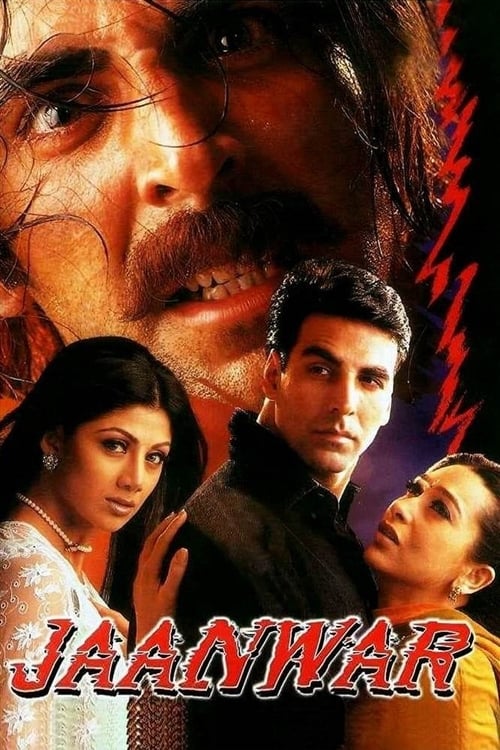
Jaanwar is a quintessential late-90s action-melodrama that prioritizes traditional hierarchies of heroism and paternalism. The story centers on a redemption arc that reinforces established social expectations rather than challenging them. The film relies on conventional romantic frameworks and patriarchal archetypes. It lacks complexity in exploring diverse identities, focusing instead on the sanctity of the familial bond and the protagonist's struggle to provide for a child. While it represents a localized cultural identity, the narrative does not seek to disrupt institutional power dynamics or explore diverse identities beyond standard commercial clichés.
Category Breakdown
The film follows a strictly straight-centered structure. Romantic tension is limited to the central relationship between Badshah and Sapna, with no depiction of non-straight identities.
The plot is driven by male characters and traditional gender roles. While Sapna provides emotional support, masculinity is defined through roles of protector, outlaw, and father.
The cast is ethnically homogeneous within a South Asian context. Abdul serves as a traditional sidekick, though the film lacks deep exploration of ethnic identity.
The narrative reinforces traditional values regarding the nuclear family and social order. The protagonist's journey focuses on domestic stability and paternal responsibility.
There is no significant focus on visible or invisible disabilities. Characters are defined by social status and familial roles rather than physical or neurodivergent traits.
Present on Screen
Limited or Absent
Official Synopsis
Sultan (Shakti Kapoor) adopted an orphan and named him Badshah (Akshay Kumar). Badshah grows up to be a criminal and his life was made difficult by Inspector Pradhan (Ashish Vidyarthi). Badshah's sidekick is Abdul (Ashutosh Rana). The only hope in Badshah's life is Sapna (Karisma Kapoor), whom he incidentally met. But circumstances lead Badshah to commit murder in public. During this experience, a child clangs to him and he took the child to Sapna. Before he could explain anything, Pradhan gets there and Badshah had to escape. He changed his name to Babu Lohar and becomes a blacksmith and loving father, to give the child a good future. However, after 7 years, he sees Abdul and Sultan again. Pradhan is still after him. When the child's parents find out about him, they ask Babu to return their child. Will he let the child go? Will the child go with his parents?
1995

2015
2003
2012
1991
2007
1991
2002
No reviews yet. Be the first to share your thoughts on this movie!
Use the rating form above to leave a star rating and optional review.