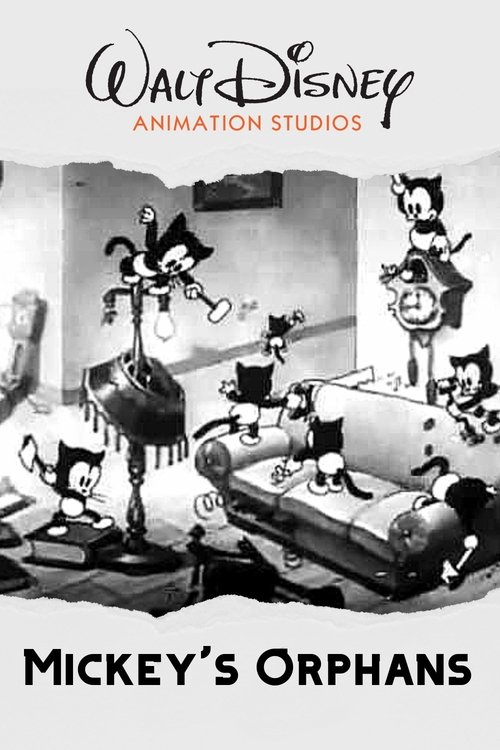
Mickey's Orphans
1931
No user ratings available yet
Representation score: 2.8 out of 10
Representation Score
Minimal
1932
NRDirector
Burt Gillett
Runtime
7 minutes
Average Rating
No ratings yetNew Showbiz Analysis
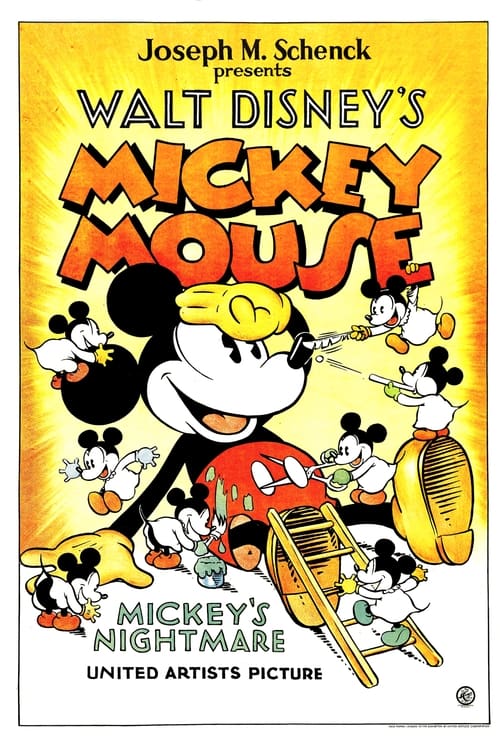
Mickey's Nightmare is a product of its era, using slapstick humor and traditional character types. The narrative follows a common early-animation cliché where domestic chaos escalates with the addition of many children. The film serves as a cautionary tale about the logistical challenges of large families. It lacks the complexity needed to challenge established social or cultural norms. Overall, the film adheres to the homogeneous casting and traditional family structures typical of 1932 animation.
Category Breakdown
The film focuses on a traditional relationship between Mickey and Minnie, with no representation of non-straight or non-cisgender identities.
The story reinforces the gender roles of the early 1930s, emphasizing a male character's aspirations for marriage and fatherhood through traditional domestic roles.
The characters are stylized animal figures that reflect the demographic uniformity of the time. There is no evidence of diverse racial backgrounds or ability to act among the characters.
The narrative adheres to the social norms of the early 20th century, focusing on the joys and challenges of parenthood without addressing broader cultural themes.
The film does not include characters with visible or invisible disabilities.
Present on Screen
Limited or Absent
Official Synopsis
Mickey dreams of marrying Minnie and having about 20 children. For all the possible joys of children, a brood this size turns the dream into a nightmare, especially when they get into the open cans of paint strewn about the house.
1931
1940
1934
1932
1931
1934
1938
1939
No reviews yet. Be the first to share your thoughts on this movie!
Use the rating form above to leave a star rating and optional review.