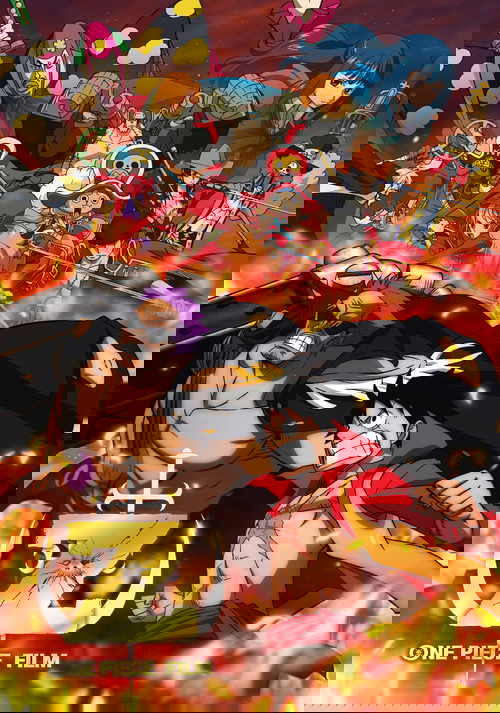
One Piece Film: Z
2012
No user ratings available yet
Representation score: 7.8 out of 10

Representation Score
Fair
2012
TV-14Director
Hayato Date
Runtime
109 minutes
Average Rating
No ratings yetNew Showbiz Analysis
Road to Ninja: Naruto the Movie is a standard action narrative that prioritizes high-concept world-building over social representation. While it presents a multifaceted global landscape through its various village affiliations, it remains tied to conventional shonen clichés. The film explores complex themes of moral ambiguity and systemic authority, yet it does not actively challenge traditional social hierarchies. It functions primarily as a character-driven journey within a rigid, established framework. Ultimately, the movie creates a rich geopolitical setting but lacks depth regarding diverse identities or nuanced explorations of lived experiences like disability or queer identity.
Category Breakdown
The film does not include explicit LGBTQ+ characters or explore non-straight relationships. It focuses on the protagonist's journey and traditional romantic archetypes without giving queer-coded characters significant roles.
Female characters like Sakura and Hinata are strong fighters, but the story remains focused on a male protagonist. The power dynamics mostly follow traditional male-driven hierarchies.
The world-building includes various 'Hidden Villages' representing distinct cultures and geopolitical identities, preventing a uniform depiction of the shinobi world.
The story delves into moral relativism and the tension between established authority and rogue factions, staying within the internal geopolitical logic of its fictional setting.
The concept of the Jinchūriki symbolizes carrying a stigmatized burden. However, characters are used for plot-driven purposes rather than exploring disability in a nuanced way.
Present on Screen
Limited or Absent
Official Synopsis
Sixteen years ago, a mysterious masked ninja unleashes a powerful creature known as the Nine-Tailed Demon Fox on the Hidden Leaf Village Konoha, killing many people. In response, the Fourth Hokage Minato Namikaze and his wife Kushina Uzumaki, the Demon Fox's living prison or Jinchūriki, manage to seal the creature inside their newborn son Naruto Uzumaki. With the Tailed Beast sealed, things continued as normal. However, in the present day, peace ended when a group of ninja called the Akatsuki attack Konoha under the guidance of Tobi, the mysterious masked man behind Fox's rampage years ago who intends on executing his plan to rule the world by shrouding it in illusions.
2012

2008
1994
2009

2007
1995
2016
2007
No reviews yet. Be the first to share your thoughts on this movie!
Use the rating form above to leave a star rating and optional review.