
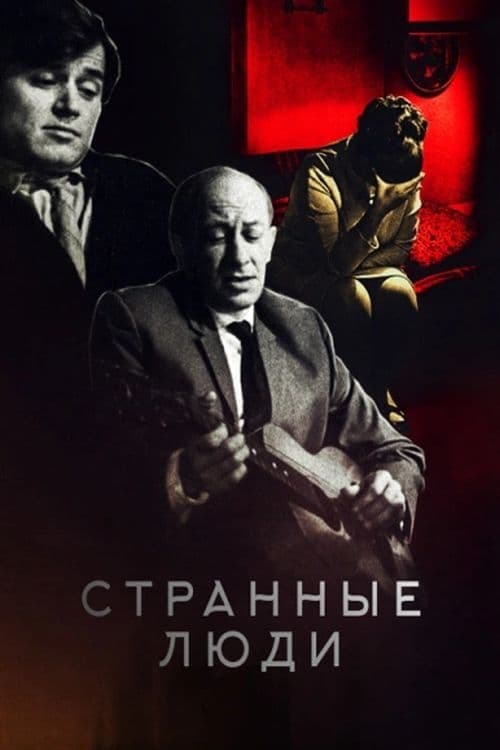
Literature Lesson
1968
No user ratings available yet
Representation score: 3.5 out of 10
Representation Score
Good
1969
Director
Vasiliy Shukshin
Runtime
83 minutes
Average Rating
No ratings yetNew Showbiz Analysis
Vasiliy Shukshin’s *Strange People* is a psychological character study that examines individuals living on the fringes of social norms. The film prioritizes the complexities of the human psyche and the tension between eccentricity and societal expectations. While it challenges conventional ideas of normalcy by focusing on individuals, it lacks clear examples of characters who reflect more than one aspect of diversity. It does not provide much evidence of diverse racial casting or specific LGBTQ+ identities within its context. Ultimately, the film offers a nuanced look at human behavior that resists rigid social structures, though it does not explicitly address broader demographic diversity.
Category Breakdown
The film explores individuals who don't conform to social norms but doesn't show any same-sex relationships or queer-coded characters.
The film focuses on the inner lives of both men and women, presenting them as vulnerable and flawed rather than as traditional heroes.
The film reflects the demographics of 1969 Soviet cinema. It emphasizes psychological uniqueness over multi-ethnic representation.
The narrative highlights individual quirks over conformity. It questions the pressure to fit into standardized social or institutional norms.
The title suggests a focus on neurodivergent or socially eccentric individuals. It's unclear if these traits are given real character development or used simply as plot devices.
Present on Screen
Limited or Absent
Official Synopsis
A comedy based on three short novels by Vasiliy Shukshin.
1968
1980
1972
1991
1991
2015

1967
1935
No reviews yet. Be the first to share your thoughts on this movie!
Use the rating form above to leave a star rating and optional review.