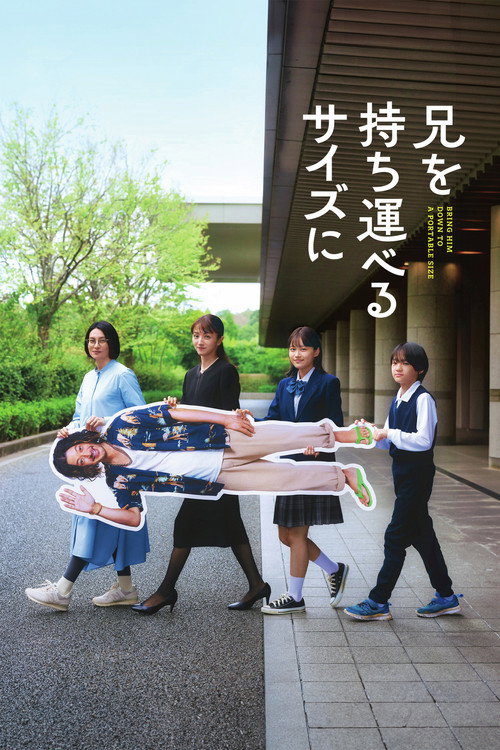
Bring Him Down to a Portable Size
2025
No user ratings available yet
Representation score: 5.0 out of 10

Representation Score
Good
2020
Director
Ryota Nakano
Runtime
127 minutes
Average Rating
No ratings yetNew Showbiz Analysis
The film is a contemplative drama that prioritizes emotional realism over broad demographic representation. It challenges the 'perfect family' cliché, encouraging viewers to see value in fragmented reality. While the narrative subtly critiques rigid social expectations, it lacks significant representation of diverse identities, focusing instead on a traditional Japanese domestic framework.
Category Breakdown
The film focuses on a traditional family structure and the protagonist's pursuit of a childhood crush. It does not include significant queer narratives or non-cisgender identities.
Masashi challenges traditional masculine stereotypes through his emotional vulnerability and irresponsibility. However, the story remains centered around a patriarchal family unit where female characters often play supporting roles.
Set in a specific Japanese cultural context, the film portrays a largely homogeneous society. It maintains a traditional depiction of Japanese domestic life without incorporating diverse ethnic identities.
The narrative critiques the 'perfect family' ideal by contrasting staged perfection with the raw reality of the 2011 earthquake. It emphasizes authentic human connections over rigid social standards.
The story examines the psychological impact and collective trauma following the Great East Japan Earthquake. Mental health struggles serve as catalysts for personal growth but do not provide a significant role in driving the story to disabled characters.
Present on Screen
Limited or Absent
Official Synopsis
Masashi is a photographer. He has his parents and an older brother Yukihiro. Through the 2011 Tohoku earthquake and tsunami, Masashi begins to take staged photos of his family.
2025

2016
2010

2004
1999
2015

2018

2018
No reviews yet. Be the first to share your thoughts on this movie!
Use the rating form above to leave a star rating and optional review.