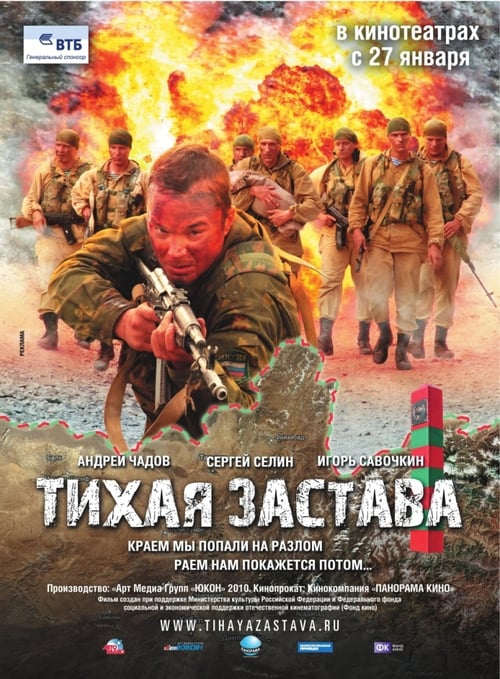
A Quiet Outpost
2011
No user ratings available yet
Diversity score: 4.2 out of 10

2004
Director
Dmitry Meskhiev
Runtime
111 minutes
Average Rating
No ratings yetSynopsis
It is August 1941. With the battle line far away in the east, three soldiers who have managed to escape from captivity find it difficult to hide: the territory is occupied by the enemy. The local woods are not safe: you can easily get embogged. Are the villagers loyal? Nobody can say. There is an old man who offers to help them. Is he reliable enough? He may kill them or report them to the local German authorities. Anything may happen, but one of them, the sniper, is his son who is his youngest, his dearest.
Overall Score
Fair
Category Breakdown
LGBTQ+ Representation
The film lacks any visible LGBTQ+ characters or non-heteronormative identities. The narrative focuses on male soldiers and a patriarchal figure, adhering to a traditional wartime framework.
Gender Representation
The story centers on masculine archetypes like soldiers and patriarchs. It does not demonstrate the elevation of female agency or a subversion of traditional gender hierarchies.
Racial & Ethnic Diversity
The cast reflects the ethnic homogeneity expected in a Soviet-era WWII setting. It provides cultural specificity to a local population rather than broad demographic diversity.
Religious & Cultural Diversity
The film avoids romanticized patriotism by highlighting village suspicion and betrayal. It explores moral ambiguity through characters navigating the ethics of survival under occupation.
Disability Representation
There is no evidence of physical or neurodivergent disabilities being portrayed in the narrative.
Strengths
Areas for Improvement
AI Analysis
Our Own is a period war drama that prioritizes historical realism and psychological tension over modern identity politics. The narrative focuses on the survival of three male soldiers and their interactions with a local patriarch during the 1941 German occupation. The film functions as a traditional historical piece, emphasizing the breakdown of social cohesion and the uncertainty of communal loyalty. It avoids the sanitized, heroic tropes often found in state-sponsored war cinema. While the film lacks intersectional representation, it succeeds in providing a nuanced look at the moral gray areas and familial bonds that define life in an occupied territory.
2011
2019
1988
2019
No reviews yet. Be the first to share your thoughts on this movie!
Use the rating form above to leave a star rating and optional review.