Historic Centre
2012
No user ratings available yet
Representation score: 5.6 out of 10
Representation Score
Good
2007
Director
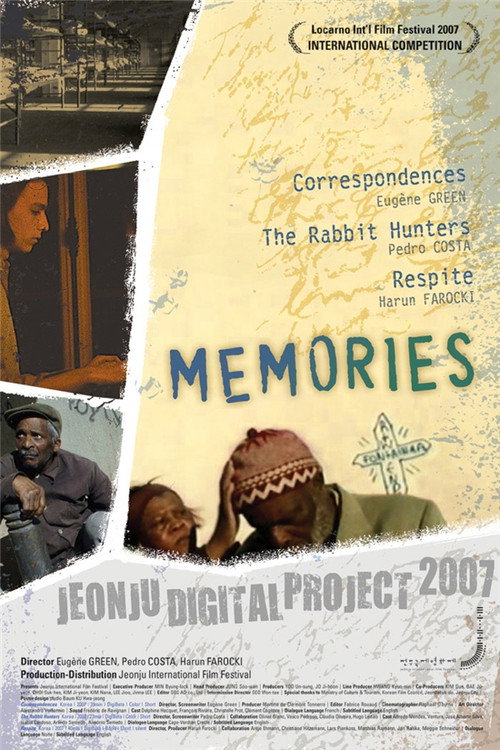
Harun Farocki, Eugène Green, Pedro Costa
Runtime
102 minutes
Average Rating
No ratings yetNew Showbiz Analysis
Memories is an experimental anthology that prioritizes formalist exploration over traditional character-driven narratives. Its non-linear and fragmented structure avoids the clichés found in mainstream cinema. The work challenges conventional storytelling hierarchies through its intellectual and essayistic approach. It offers a sophisticated view of the human experience by deconstructing historical and visual memory. However, the fragmented nature of the film means it lacks strong character arcs. This results in a moderate level of representation across most identity categories.
Category Breakdown
The representation is subtle and often implied. The directors' backgrounds suggest a sensitivity towards diverse sexualities and underrepresented viewpoints within European cinema.
The films avoid typical romantic or domestic storylines. By focusing on the observer's perspective and observational studies, the work disrupts traditional masculine or feminine stereotypes.
The project serves as a cross-cultural bridge, emphasizing European voices. It explores identity through a globalized lens and potential socioeconomic contexts.
The anthology showcases high cultural complexity through a postmodern lens. It prioritizes intellectual inquiry and the deconstruction of historical memory over traditional moralizing.
There is a potential focus on vulnerability and the human condition. However, the work lacks clear examples of characters with disabilities taking significant action.
Present on Screen
Limited or Absent
Official Synopsis
Previously focused on Asian directors, “Jeonju Digital Project 2007” takes a look at Europe. The Portuguese filmmaker Pedro Costa, the German filmmaker Harun Farocki, and the French filmmaker Eugène Green participated in this project.
2012
2007
2013
2002
2023
2001

2004
2014
No reviews yet. Be the first to share your thoughts on this movie!
Use the rating form above to leave a star rating and optional review.