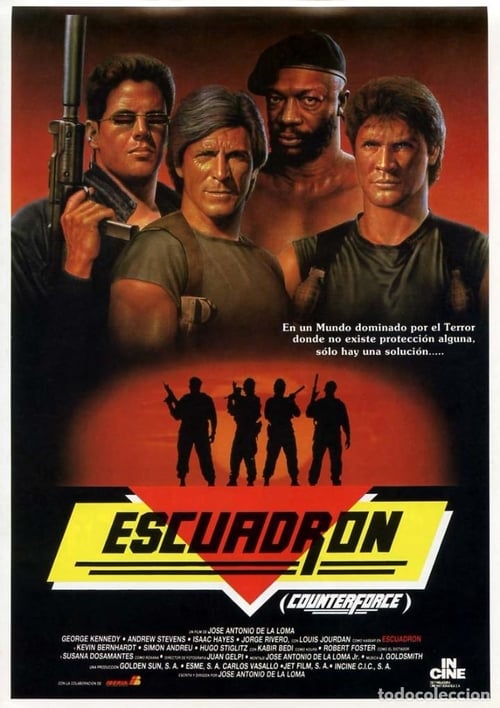
Counterforce
1988
No user ratings available yet
Representation score: 3.0 out of 10
Representation Score
Minimal
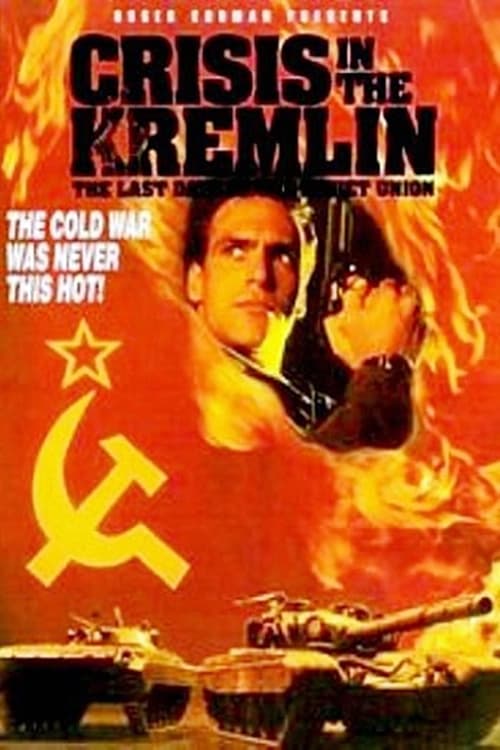
1992
RDirector
Jonathan Winfrey
Runtime
85 minutes
Average Rating
No ratings yetNew Showbiz Analysis
The film opens with a desaturated, documentary-style montage of Soviet parades, immediately establishing a Cold War binary where the grey, imposing architecture of the Kremlin contrasts with the warmth of individual American morality. This visual language sells a specific meaning: the state is a hollow machine, and the individual is the only source of authentic life. Jack Reilly, played by Robert Rusler, is framed not as a polished star but as a weathered, working-class man whose physical endurance and moral clarity stand in direct opposition to the bureaucratic rigidity of General Chernov. The camera lingers on Reilly’s profile shots, emphasizing his determination, while Yanina is bathed in soft light, her vulnerability serving as the emotional stake that justifies his intervention. The narrative’s argument is straightforward: Western individualism and Christian faith are the antidotes to Soviet collectivism. Father Andris, the priest hostage, provides a spiritual foil to the atheist state, his calm demeanor highlighting the "spiritual vacuum" of the regime. However, the film’s internal logic relies on a traditional gender hierarchy that undermines its progressive surface. Reilly is the sole agent of change; Yanina is the object to be saved, and Leo, the intellectual hostage, is respected for his mind but ultimately passive in the face of physical danger. The "joke" is the Soviet bureaucrat who cannot comprehend individual rights, while the "reward" is the restoration of order through American action. The ending settles this moral verdict in a wide, static frame of the Kremlin walls, with Reilly standing alone in the snow. He is not triumphant but exhausted, his isolation emphasizing the weight of the individual against the massive state apparatus. The film does not mock the uniform or the system; it simply places the American man as the competent protector and the Soviet man as the rigid oppressor. This is a standard Cold War artifact, where the "West" is the source of moral clarity and the "East" is the source of collective guilt. The pictures like the rugged hero and the vulnerable beauty, and they treat the traditional hierarchy of gender and nation as the natural order of the world.
Category Breakdown
No queer characters or same-sex intimacy appear. The narrative relies exclusively on heterosexual, Cold War-era gender dynamics.
Jack Reilly is the sole competent protector, while Yanina serves as the vulnerable local guide. The camera treats male action as the solution and female presence as the moral stake.
The cast is predominantly white, reflecting the 1992 Cold War context. Eastern European characters are framed as exotic or oppressed, while the American protagonist embodies unmarked moral authority.
The film positions Western individualism and Christian faith as the moral antidote to Soviet collectivism. General Chernov represents state rigidity, while Father Andris and the American hero provide spiritual and physical freedom.
No characters with disabilities or chronic illnesses are depicted. Physical endurance and vulnerability are framed strictly through the lens of action-hero competence and hostage fragility.
Present on Screen
Limited or Absent
Official Synopsis
The sister-in-law of an assassin and a CIA agent team-up to save Gorbachev's life.
1988
1995
1998
1977
1985
1984
1995
2001
No reviews yet. Be the first to share your thoughts on this movie!
Use the rating form above to leave a star rating and optional review.