
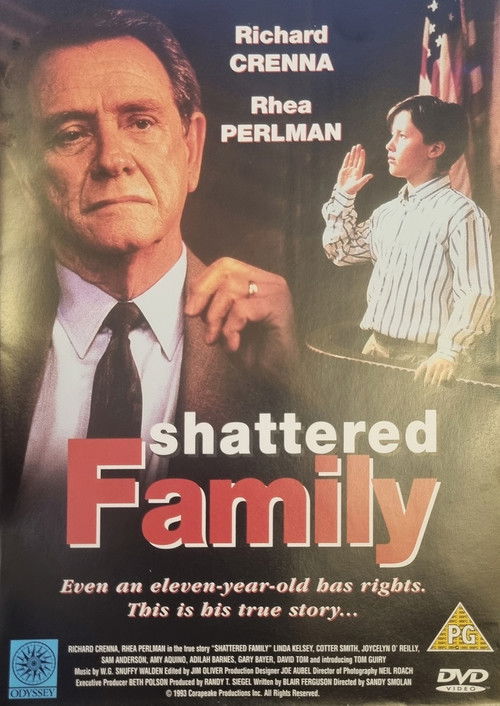
Home at Last
1988
No user ratings available yet
Representation score: 1.9 out of 10
Representation Score
Good
1993
Director
Sandy Smolan
Runtime
95 minutes
Average Rating
No ratings yetNew Showbiz Analysis
A Place to Be Loved is a social realist drama that challenges the sanctity of biological family structures. It empowers a child to legally sever ties with abusive parents to seek stability. However, the film lacks significant representation in terms of racial, ethnic, or LGBTQ+ diversity. Its focus on a conventional Western social services framework limits its multi-layered breadth. Ultimately, the film's progressive value lies in its deconstruction of traditional kinship hierarchies, prioritizing individual well-being and functional domestic environments over biological loyalty.
Category Breakdown
The film does not include any visible LGBTQ+ characters or non-straight identities. The story focuses solely on the legalities of foster care and traditional family structures.
The story emphasizes the role of a child navigating through parental failures. It challenges the idea of sacred biological motherhood by highlighting the importance of competent foster families.
There is no indication of a multi-ethnic cast. The narrative follows a conventional Western social services framework typical of 1993 television.
The film questions traditional Western institutions by prioritizing 'chosen family' over biological ties. It explores the moral complexity of legal battles against natural parents.
While the film addresses the psychological trauma of abuse, it lacks explicit representation of physical or neurodivergent disabilities with specific roles.
Present on Screen
Limited or Absent
Official Synopsis
Gregory Kingsley, a boy passed off onto social services by his natural mother and abused by his natural father, finds the foster family he is put into to be the type of family he needs and takes his natural mother to court to have her parental rights revoked so that he can be adopted by the Russes. The story is based on the real case of the boy who really did have to take this action to avoid being sent back into an unacceptable situation.
1988
1995

1993

2012
1988

1981

2017
1993
No reviews yet. Be the first to share your thoughts on this movie!
Use the rating form above to leave a star rating and optional review.