The Oil Gush in Balakhany
1899
No user ratings available yet
Representation score: 1.9 out of 10
Representation Score
Limited
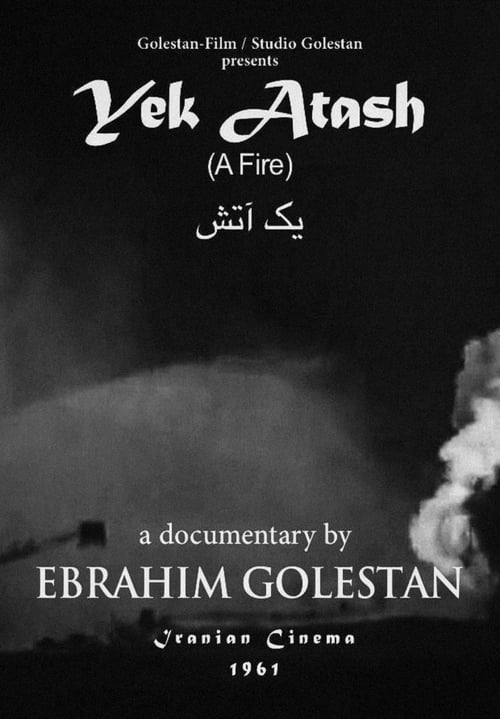
1961
Director
Ebrahim Golestan
Runtime
24 minutes
Average Rating
No ratings yetNew Showbiz Analysis
A Fire is considered a modernist masterpiece that deconstructs the traditional progress narrative. Instead of serving as straightforward industrial propaganda, it uses an avant-garde style to explore existentialism and psychological fragmentation. The film's strength lies in its narrative structure, which shifts the focus from institutional success to the instability of the human psyche. This approach challenges the viewer's perception of stability and modernization. While the film does not offer contemporary characters who reflect more than one aspect of diversity, its cultural significance is in resisting the Western perspective and offering a poetic, non-linear narrative.
Category Breakdown
The film does not include any characters or stories related to LGBTQ+ individuals. Instead, it focuses on industrial imagery and existential themes.
Gender roles are not clearly defined due to the film's emphasis on psychological states. However, the role of Forough Farrokhzad as editor introduces a unique, non-traditional creative structure.
The film centers on a non-Western perspective during a time of modernization. It highlights Iranian ability to act by interpreting global industrial events through a local, poetic lens.
The work challenges Western documentary conventions by prioritizing subjective experiences over objective reporting. It critiques the dehumanizing aspects of rapid industrial growth and modernization.
The film does not feature any characters with visible or invisible disabilities as central plot devices or subjects of analysis.
Present on Screen
Limited or Absent
Official Synopsis
The National Iranian Oil Company (NIOC), formed upon nationalization of the British Anglo-Iranian Oil Company, employed film systematically, producing many films on oil and petrochemical subjects. It also made films depicting Iran's progress and modernization, highlighting the role of the Shah and NIOC in that direction. Under its auspices, Ebrahim Golestan directed A FIRE (1961), a highly visual treatment of a seventy-day oil well fire in the Khuzestan region of southwestern Iran. This film was edited by the Iranian poet Forough Farrokhzad and won two awards at the Venice Film Festival in 1961.
1899

1992
1899
2010
1992
1969
1964
1931
No reviews yet. Be the first to share your thoughts on this movie!
Use the rating form above to leave a star rating and optional review.