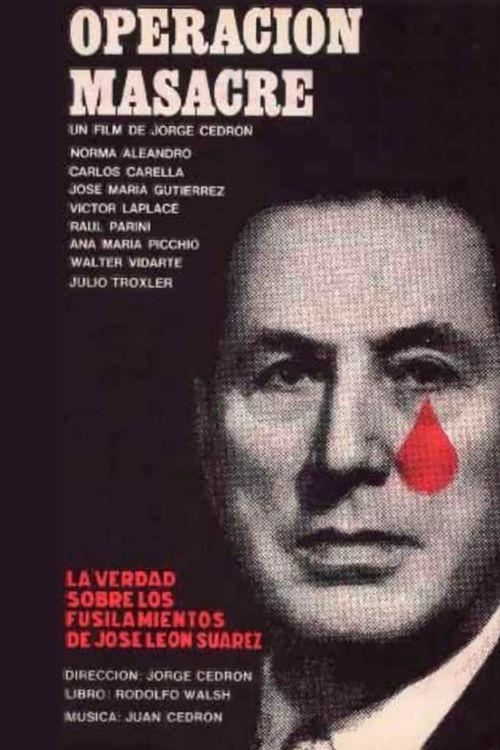
Operación Masacre
1973
No user ratings available yet
Representation score: 5.5 out of 10
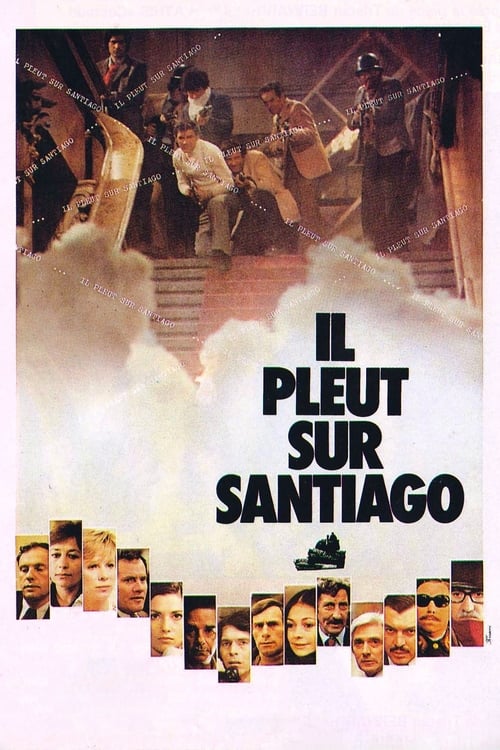
Representation Score
Limited
1975
Director
Helvio Soto
Runtime
112 minutes
Average Rating
No ratings yetNew Showbiz Analysis
Rain over Santiago is a heavy historical drama that prioritizes political realism over identity-based representation. It succeeds in shifting the focus away from Western-centric histories to highlight Latin American systemic struggles. The film's strength lies in its cultural critique and its examination of the dismantling of democratic institutions. It offers a nuanced view of power dynamics during the 1973 Chilean coup. However, the film remains limited by its focus on male-dominated political and military spheres. It lacks representation for LGBTQ+ individuals and does not address disability or neurodivergence.
Category Breakdown
The film does not include documented LGBTQ+ character arcs or stories that go beyond the assumption that everyone is straight or cisgender. The story focuses mainly on large-scale political changes and historical upheavals.
Control over the story is primarily held by male-led military and political hierarchies. However, the narrative also includes perspectives from women regarding domestic life and the personal impact of loss.
The film centers on a non-Anglo-Saxon identity by focusing on the Chilean socio-political situation. It emphasizes the experiences and struggles of a specific Latin American national identity.
The narrative criticizes Western-aligned power structures by depicting the military takeover as a disruption of a socialist government. It highlights the experiences of those harmed by broader social or institutional forces.
There is no indication that disability or neurodivergence plays a role in the character arcs or plot progression.
Present on Screen
Limited or Absent
Official Synopsis
A semi-fictional account on the fatidic September 11, 1973, when the military commanded by General Pinochet took over the power from socialist president Salvador Allende, initiating a dictatorship that lasted until 1988 causing the deaths and disappearances of many people.
1973
2020

2000
1985
2017
1979
2000

1974
No reviews yet. Be the first to share your thoughts on this movie!
Use the rating form above to leave a star rating and optional review.