
Nanayo
2008
No user ratings available yet
Representation score: 5.4 out of 10
Representation Score
Fair
2025
Director
Naomi Kawase
Runtime
122 minutes
Average Rating
No ratings yetNew Showbiz Analysis
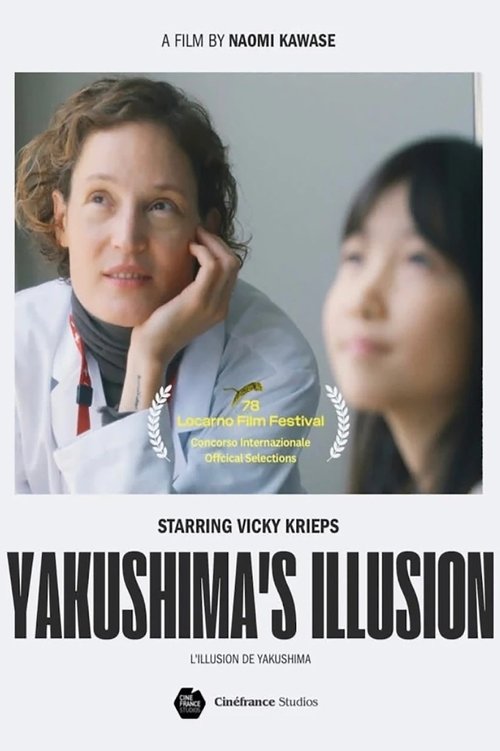
The film opens on the misty, ancient cedar roots of Yakushima, a landscape that feels older and more permanent than the humans moving through it. Naomi Kawase’s camera treats the forest not as a backdrop but as the primary subject, framing Vicky Krieps’s Corry as a quiet observer rather than a protagonist who conquers her environment. Corry arrives as a French medical coordinator tasked with navigating the taboo of organ donation in Japan, a professional mission that quickly dissolves when her partner, Jin, vanishes. The sold meaning is one of humility: the film argues that human urgency—medical, romantic, or national—is small against the slow, indifferent rhythm of nature. The argument is tested by the film’s internal logic, which refuses to let Corry’s Western expertise or emotional crisis dominate the frame. Jin is not a toxic partner to be rescued or a mystery to be solved; he is simply part of the island’s texture, and his absence is treated with the same stillness as the rain. The Japanese characters are not exoticized as wise sages or reduced to obstacles; they are simply people living within a specific cultural and ecological context. The film’s moral verdict settles in the final image: Corry standing alone in the rain, looking up at the cedars. She is not smiling, nor is she crying. She is simply present. The camera pulls back, revealing the vastness of the forest swallowing her small figure. The ending rewards stillness and observation over action or resolution, affirming that the natural world does not need to be understood, saved, or documented to be valid.
Category Breakdown
Corry and Jin share a quiet romantic partnership defined by domestic silence rather than explicit dialogue. No same-sex intimacy, trans characters, or non-binary identities appear on screen. The narrative lacks coming-out scenes or queer conflict as structural drivers.
Corry serves as the moral and professional center, navigating a medical crisis with quiet competence while Jin vanishes. Jin remains a grounded, competent male figure rather than a comic or inept foil. No gender-based conflict or patriarchal oppression serves as the film’s structural engine.
The cast is predominantly Japanese, with Vicky Krieps as the sole European lead reflecting the cross-cultural premise. Corry’s whiteness marks her as an outsider observer, but her foreignness is not treated as a moral failing. No racial hierarchy or white savior dynamic is explicitly constructed in the visuals.
Japanese traditions around organ donation and family duty are presented as complex, lived realities rather than obstacles. The film treats the island’s rhythms and elder wisdom as valid, unmarked defaults without framing them as exotic. No Western institutions are depicted as the superior or correct moral framework.
The plot centers on pediatric heart transplants, introducing medical necessity and bodily fragility as narrative stakes. No disabled characters are shown as ongoing, autonomous agents; impairment functions primarily as a plot device. No disabled actors, neurodivergent portrayals, or fat bodies are depicted on screen.
Present on Screen
Limited or Absent
Official Synopsis
Corry, a French coordinator of pediatric heart transplants is sent to Japan where organ donation remains taboo. As she fights to save a young boy, her partner Jin, a photographer from Yakushima, suddenly vanishes.
2008
2014
2007
2024

2005
2016
2003
2018
No reviews yet. Be the first to share your thoughts on this movie!
Use the rating form above to leave a star rating and optional review.