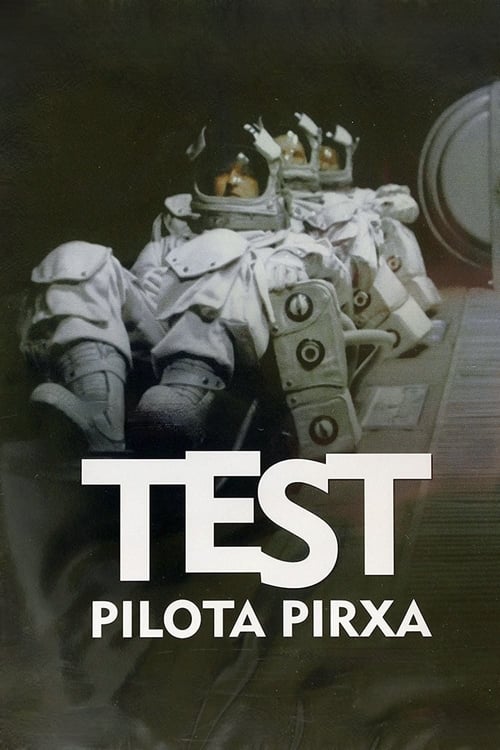
Pilot Pirx's Inquest
1979
No user ratings available yet
Diversity score: 4.3 out of 10

1981
Director
Piotr Szulkin
Runtime
94 minutes
Average Rating
No ratings yetSynopsis
Poland, Christmastime. A band of hyperintelligent, bloodthirsty Martians take over the country and enlist hapless television newscaster Iron Idem as the voice of their propaganda machine. But when Iron dares to go off message, he makes an enemy even greater than the aliens—the state itself.
Overall Score
Fair
Category Breakdown
LGBTQ+ Representation
The film focuses on existential and political themes rather than identity-driven narratives. It lacks explicit non-cisnormative identities or same-sex intimacy, though its postmodern atmosphere avoids traditional heteronormative certainties.
Gender Representation
The story centers on Iron Idem's struggle against systemic forces. While it lacks female intellectual subversion, it avoids traditional domestic hierarchies by focusing on a de-personalized, dystopian landscape.
Racial & Ethnic Diversity
The film depicts a homogeneous social structure within a specific Polish setting. It functions as a localized allegory for totalitarianism rather than a study of multi-ethnic or intersectional racial dynamics.
Religious & Cultural Diversity
The film excels in its critique of institutional power and state-controlled media. It effectively portrays the established order as a systemic antagonist through its sophisticated deconstruction of manufactured consent.
Disability Representation
No specific character arcs for neurodivergence or physical disability are present. However, the pervasive atmosphere of physical and psychological decay suggests a thematic preoccupation with human frailty.
Strengths
Areas for Improvement
AI Analysis
Piotr Szulkin’s film is a high-concept philosophical science fiction piece that prioritizes systemic critique over demographic representation. It uses the Martian invasion as a lens to examine the friction between individual agency and state-mandated reality. The work scores low in traditional identity-based categories because its narrative architecture is designed as a localized allegory for totalitarianism. It lacks explicit portrayals of racial, gender, or LGBTQ+ diversity, focusing instead on the mechanics of propaganda. However, the film achieves significant depth in its cultural critique. By deconstructing the authority of institutionalism and the stability of truth, it offers a sophisticated look at how centralized power operates.
1979
1977
1980

1989

1979

1951

1984

2017

2020

2005

1994
1996
No reviews yet. Be the first to share your thoughts on this movie!
Use the rating form above to leave a star rating and optional review.