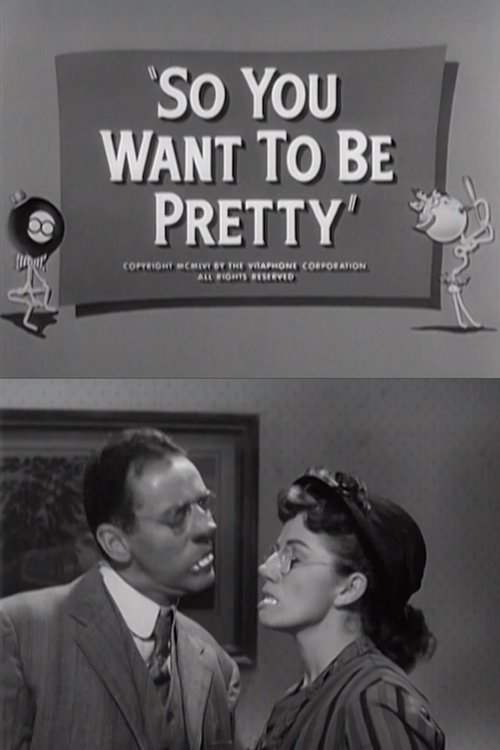
So You Want to Be Pretty
1956
No user ratings available yet
Diversity score: 2.1 out of 10
No Poster Available
1952
ApprovedDirector
Richard L. Bare
Runtime
10 minutes
Average Rating
No ratings yetSynopsis
It's a dangerous hypnotic suggestion when a psychiatrist tells married couple Joe and Alice McDoakes to switch points of view during a session.
Overall Score
Limited
Category Breakdown
LGBTQ+ Representation
The film focuses on a heteronormative married couple. There is no evidence of queer narratives or non-cisnormative identities.
Gender Representation
The story uses a role-reversal trope through hypnotic suggestion. This comedic device typically lampoons gender differences to reinforce traditional domestic status quos.
Racial & Ethnic Diversity
The film reflects the homogeneous casting standards of the early 1950s. No intersectional casting or racial diversity is present in the narrative.
Religious & Cultural Diversity
The plot centers on the nuclear family and Western social structures. It treats the disruption of established domestic roles as a source of comedic danger.
Disability Representation
While a psychiatrist is mentioned, there is no meaningful representation of neurodivergence or physical disabilities. Characters lack agency regarding mental health themes.
Strengths
Areas for Improvement
AI Analysis
This 1952 comedy operates strictly within the conventional social hierarchies of the mid-century studio system. The narrative relies on a psychological experiment to drive its plot, using gender role reversal as a comedic device rather than a tool for social commentary. The film reinforces traditionalist structures by framing the subversion of domestic norms as a source of chaos. It lacks any significant representation of LGBTQ+ identities, racial diversity, or disability agency, reflecting the era's narrow focus on the heteronormative nuclear family. Ultimately, the work functions as a period-typical domestic comedy that validates existing social roles through the lens of temporary, hypnotic confusion.
1956
1947
1951
1947
1955
1947
1952
1945

1946
1953
1950
1951
No reviews yet. Be the first to share your thoughts on this movie!
Use the rating form above to leave a star rating and optional review.