Something's Happening
1967
No user ratings available yet
Representation score: 7.8 out of 10
Representation Score
Good
1968
RDirector
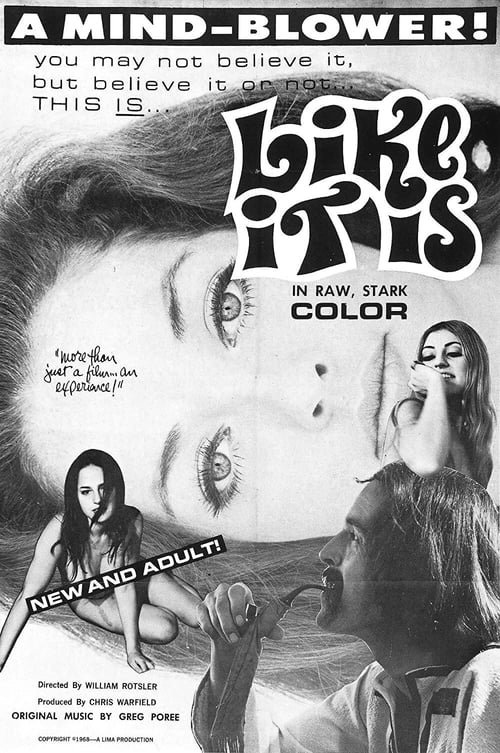
William Rotsler
Runtime
72 minutes
Average Rating
No ratings yetNew Showbiz Analysis
William Rotsler’s documentary serves as a time capsule for the late 1960s counter-culture. It succeeds by capturing the deconstruction of traditional Western institutions and the shift toward egalitarian social structures. The film's strength lies in its focus on identity-driven movements and the rejection of rigid social hierarchies. However, the work lacks specific clarity regarding racial composition and provides no visible representation of disability. While the subtext critiques traditional mores, the film's reliance on the broader 'free love' movement leaves some specific identity markers unexamined.
Category Breakdown
The film explores the 'free love' movement, which challenges the assumption that everyone is straight or cisgender. It highlights non-traditional relationship dynamics through communal living.
The documentary deconstructs traditional patriarchal leadership and domestic roles. It shows a fluidity in gendered social expectations within the hippie counter-culture.
The film likely captures racial blending inherent to the era's communal experiments. However, the specific composition of the cast remains unverified.
The narrative prioritizes secularism and subjective morality over religious ethics. It frames anti-establishment behaviors as a form of liberation from restrictive social contracts.
There is no evidence available to assess the representation of physical or neurodivergent disabilities in this work.
Present on Screen
Limited or Absent
Official Synopsis
This documentary on the "youth movement" of the late 1960s focuses on the hippie pot smoking/free love culture in the San Francisco Bay area.
1967
1981

1968
2016
2006
1970
1968
2017
No reviews yet. Be the first to share your thoughts on this movie!
Use the rating form above to leave a star rating and optional review.