
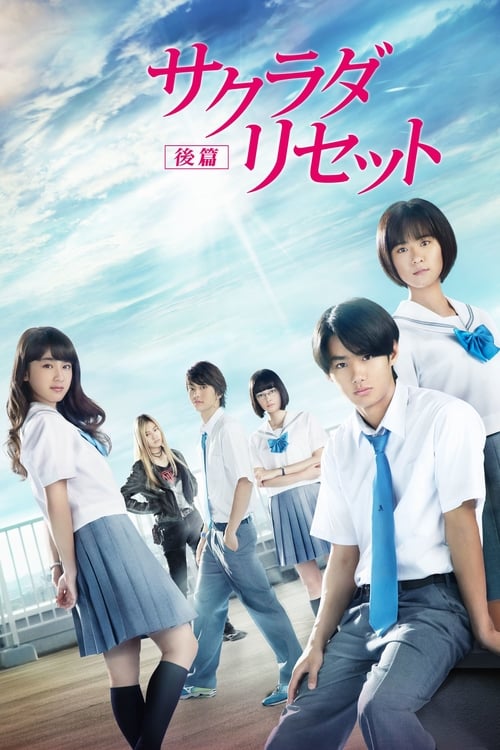
Sagrada Reset Part 1
2017
No user ratings available yet
Representation score: 6.5 out of 10
Representation Score
Good
2017
Director
Yoshihiro Fukagawa
Runtime
125 minutes
Average Rating
No ratings yetNew Showbiz Analysis
Sagrada Reset Part 2 explores the mechanics of memory and time manipulation through the eyes of two high school students. While the film avoids traditional gender hierarchies by giving a female lead significant power, it does not delve deeply into broader issues of diversity. The narrative focuses on a social hierarchy defined by special abilities, offering potential for exploring cognitive differences. However, the film remains centered on genre-specific clichés rather than broader social critiques. In essence, the production is a localized drama that prioritizes philosophical questions about causality over diverse social representation.
Category Breakdown
The film does not explicitly address same-sex relationships or queer identities. There is no mention of LGBTQ+ characters or storylines involving non-traditional gender roles.
Misora Haruki is a strong female character with significant influence and abilities. Her role challenges the typical male-dominated structure in science fiction.
The setting seems culturally uniform, focusing on a Japanese context. The story does not include diverse ethnic backgrounds or multicultural interactions.
The story emphasizes ethical questions about memory and time manipulation. It does not address anti-capitalist or anti-Western themes, focusing instead on personal moral choices.
Special abilities in the film might represent neurodivergent conditions or cognitive differences. However, it is unclear if these traits are used to explore meaningful identities or simply as plot devices.
Present on Screen
Limited or Absent
Official Synopsis
In the town of Sakurada, where about half of the residents have special abilities, high schooler Kei Asai is able to remember everything. His classmate Misora Haruki has the power to reset the world by three days. If they combine their powers, they can go back in time by three days and retain their memory.
2017

1968

2023

2006

2019
2014

2024

1998
No reviews yet. Be the first to share your thoughts on this movie!
Use the rating form above to leave a star rating and optional review.