
Mr. Kaplan
2014
No user ratings available yet
Diversity score: 4.6 out of 10
2009
Director
Urs Odermatt
Runtime
110 minutes
Average Rating
No ratings yetSynopsis
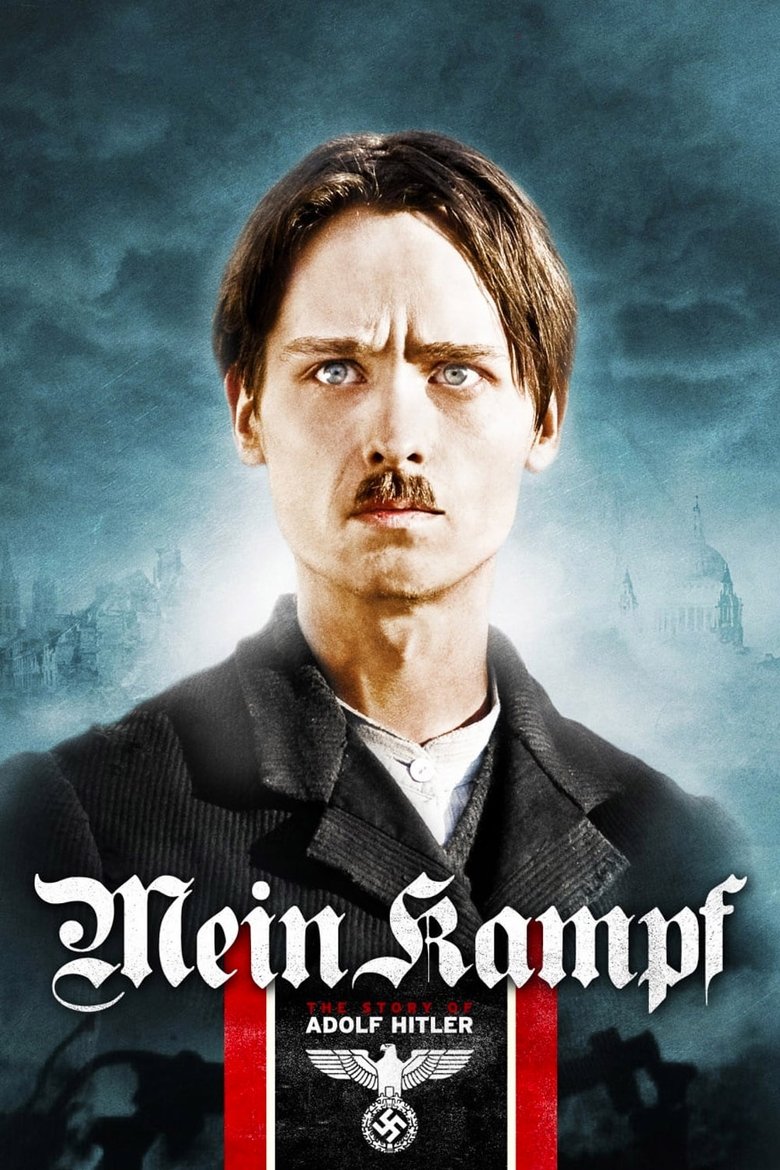
The young, despotic and untalented artist Adolf Hitler comes to Vienna to study art. He befriends the Jew Schlomo Herzl working on a novel with the title "Mein Kampf". Hitler is rejected by the Vienna Academy of Fine Arts. Herzl's concern for the sad young man continues, and leads him to a new career with disastrous consequences for world history.
Overall Score
Limited
Category Breakdown
LGBTQ+ Representation
The film lacks visible LGBTQ+ characters or narratives centered on non-cisnormative identities. The focus remains strictly on the historical and political trajectory of the protagonist.
Gender Representation
The narrative is heavily skewed toward a male-dominated sphere, reflecting historical constraints. Women appear primarily in peripheral roles, lacking the agency to drive the central plot.
Racial & Ethnic Diversity
The film introduces Schlomo Herzl, a Jewish character, as a central companion and intellectual influence. This dynamic places a person of color in a position of intellectual agency.
Religious & Cultural Diversity
The film portrays the corruption and failure of traditional institutions as a catalyst for radicalization. It remains grounded in a historical biographical framework.
Disability Representation
There is no significant evidence of characters with visible or invisible disabilities being portrayed with agency. The focus remains on psychological states and political maneuvering.
Strengths
Areas for Improvement
AI Analysis
Urs Odermatt’s drama offers a psychological study of failed ambition through a revisionist lens. While it avoids simple villainous tropes, the narrative structure remains heavily tethered to a male-centric, historically conventional framework. The film's primary strength lies in its use of Schlomo Herzl to provide a necessary counter-perspective to the protagonist's worldview. This interaction explores the intersection of ethnic identity and the ideological forces that would eventually target it. However, the film struggles with representation in most other areas. It lacks meaningful engagement with gender, disability, or LGBTQ+ identities, resulting in a narrow social scope.
2014
2017

2018

1955
1975
1969
No reviews yet. Be the first to share your thoughts on this movie!
Use the rating form above to leave a star rating and optional review.