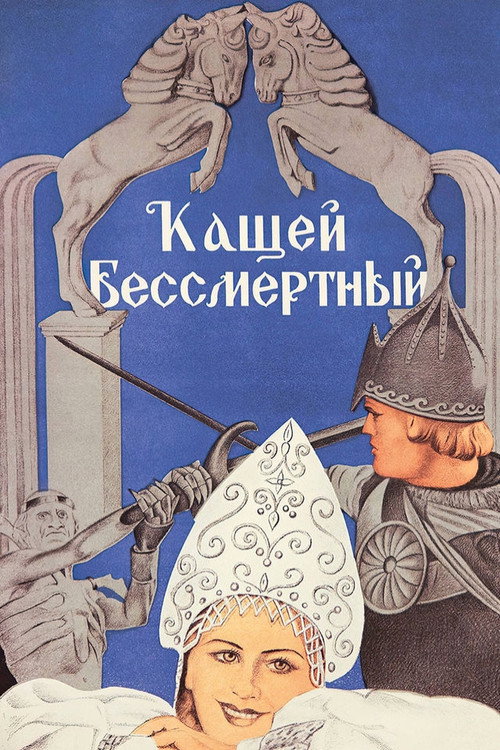
Kashchey the Immortal
1944
No user ratings available yet
Representation score: 2.0 out of 10
Representation Score
Limited
1940
Director
Aleksandr Rou
Runtime
72 minutes
Average Rating
No ratings yetNew Showbiz Analysis
Vassilisa the Beautiful is a traditionalist work that prioritizes the preservation of Slavic folklore over the inclusion of diverse perspectives. It functions as a moral universe where characters adhere to established archetypes. The film reinforces conventional hierarchies, particularly regarding gender and social roles. While the protagonist displays personal strength, the narrative structure remains rooted in traditional romantic and patriarchal expectations. Ultimately, the production serves as a cultural time capsule. It celebrates a singular ethnic and moral reality, offering little room for the subversion of systemic norms or diverse identities.
Category Breakdown
The film follows a strictly straight-centered structure focused on marriage. There are no depictions of non-traditional gender identities or same-sex relationships.
Vasilisa shows resilience despite her curse, yet her journey remains tied to her beauty. Ivanushka is positioned as the active protector while Vasilisa experiences transformative vulnerability.
The story presents a culturally homogeneous Slavic setting. It focuses on preserving specific ethnographic traditions without exploring diverse ethnic perspectives.
The film operates within a folkloric framework that promotes a binary distinction between good and evil. It celebrates traditional social stability and the preservation of cultural myths.
Physical differences are framed through magical transformations rather than real-life experiences. The frog transformation serves as a supernatural plot device rather than a nuanced exploration of impairment.
Present on Screen
Limited or Absent
Official Synopsis
Russian folk tale about a father whose three sons go out to finds themselves brides. Two of the boys come home with perfectly normal girls, but the youngest brother, Ivanushka, brings home a frog from the marshes. His father finds this most curious, but what he does not know was that the frog was actually a beautiful girl named Vasilisa who was cursed by a magical serpent whom she refused to marry. Now Ivanushka must overcome tremendous obstacles to restore Vasilisa to her true form and free her from the serpent's spell.
1944
1965
1941

1957

1967
1958
1975
1950
No reviews yet. Be the first to share your thoughts on this movie!
Use the rating form above to leave a star rating and optional review.