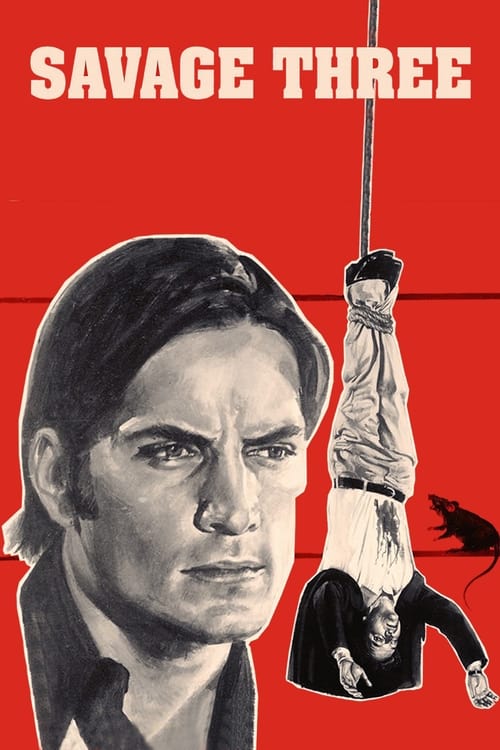
Savage Three
1975
No user ratings available yet
Diversity score: 3.2 out of 10
1975
Director
Lucio Marcaccini
Runtime
94 minutes
Average Rating
No ratings yetSynopsis
The story is about a youth named Massimo Monaldi, who, living in Rome, is a part-time college student who has some involvement in the protests that occur at his university. Massimo is also involved with drugs and he sometimes steals to make a living and support his habit (the theft of a tobacco box is very important to the story). Among his associates are his girlfriend, Cinzia, who comes from a wealthy family, and he has a wealthy male friend named Rudy who is very naive as well as strangely pampered by his overly-doting mother. Both families don't approve of their relationship with Massimo.
Overall Score
Limited
Category Breakdown
LGBTQ+ Representation
The film lacks explicit LGBTQ+ characters or non-heteronormative identities. The central romantic arc is defined by a heterosexual relationship between Massimo and Cinzia.
Gender Representation
Cinzia serves as a wealthy counterpoint to the protagonist, though she appears to function more as a romantic foil than an independent agent. The film does not subvert traditional gender hierarchies.
Racial & Ethnic Diversity
Set in Rome, the story focuses on a homogeneous social group of Italian students. There is no evidence of racial blending or diverse ethnic perspectives.
Religious & Cultural Diversity
The narrative disrupts social norms by centering on university protests, drug use, and petty theft. It offers a critique of state intervention and institutional efficacy.
Disability Representation
There is no evidence regarding the inclusion of characters with physical or neurodivergent disabilities.
Strengths
Areas for Improvement
AI Analysis
Hallucination Strip is a localized crime drama that prioritizes social friction and class tension over demographic intersectionality. While it lacks representation for LGBTQ+ individuals, diverse ethnicities, or people with disabilities, it finds strength in its cultural critique. The film explores the breakdown of mid-century social norms through a protagonist caught between academic rebellion and criminal survival. This focus on systemic pressure provides a layer of cultural subversion that offsets its narrow demographic scope. Ultimately, the film functions as a study of urban decay and institutional failure rather than a diverse ensemble piece.
1975
1961
1972
1984
1977
1972
1990
No reviews yet. Be the first to share your thoughts on this movie!
Use the rating form above to leave a star rating and optional review.