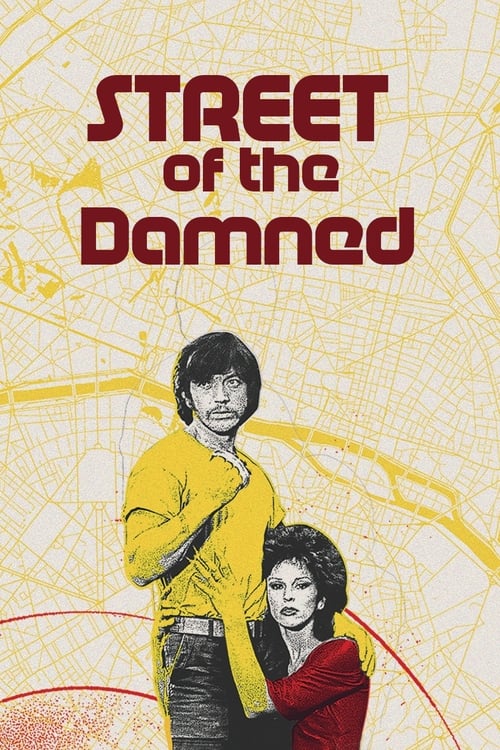
Street of the Damned
1984
No user ratings available yet
Diversity score: 3.2 out of 10

1984
Director
Sergio Gobbi
Runtime
90 minutes
Average Rating
No ratings yetSynopsis
Good dope is becoming rare in the North of Paris. Drugstores are being raided by junkies and gangs are nervous, fighting each others: the 'Viets', the 'Blackies', the 'Arabs', the neo-nazis 'Justiciers' and some mean gays. Vincent (Daniel Auteuil) is the good cop coming from Marseilles where he was a gangster. He's a soft method guy but also kicks assses hard and throw lethal dialog lines when needed. With the precious help of 'l'Arbalète'* (Marisa Berenson**), a tox' prostitute ex-member of Vincent's former gang, he will try to put order in that mess. There's also a violent and racist cop (Marcel Bozzuffi), Algeria veteran with hard methods, whose role could be more than to protect and to serve.
Overall Score
Fair
Category Breakdown
LGBTQ+ Representation
The film includes 'mean gays' within the gang landscape of Northern Paris. These characters primarily serve to populate a chaotic environment rather than receiving nuanced development or critique.
Gender Representation
Marisa Berenson plays a female protagonist with significant agency as a former gang member. However, her role remains tied to the male protagonist's arc within a male-dominated power struggle.
Racial & Ethnic Diversity
The narrative disrupts depictions of a homogeneous society by naming various ethnic factions like 'Viets,' 'Blackies,' and 'Arabs.' This reflects the multicultural tensions of 1980s Parisian outskirts.
Religious & Cultural Diversity
The film explores systemic instability through a fractured institutional authority. It portrays a landscape of moral relativism where traditional law struggles against drug-fueled anarchy and identity-based warfare.
Disability Representation
There is no discernible evidence regarding the portrayal of physical or neurodivergent disabilities in this work.
Strengths
Areas for Improvement
AI Analysis
The Syringe offers a gritty, multicultural portrait of 1980s Paris, using a diverse cast to mirror urban tensions. It successfully avoids a monolithic social structure by incorporating various ethnic and sexual identities into its central conflict. However, the representation often feels tethered to crime genre tropes. While ethnic groups are explicitly named, character depth is frequently sacrificed to drive the high-stakes gang warfare and criminal subculture narratives. Ultimately, the film provides a cynical look at a fragmented society. It captures intersectional urban dynamics without transitioning into deep, character-driven studies of the marginalized groups it depicts.
1984
2002
1975
1972
1977
2014
1971
1996
1978
No reviews yet. Be the first to share your thoughts on this movie!
Use the rating form above to leave a star rating and optional review.