
Julie Walking Home
2002
No user ratings available yet
Representation score: 6.2 out of 10
Representation Score
Fair
1999
Director
Morten Henriksen
Runtime
123 minutes
Average Rating
No ratings yetNew Showbiz Analysis
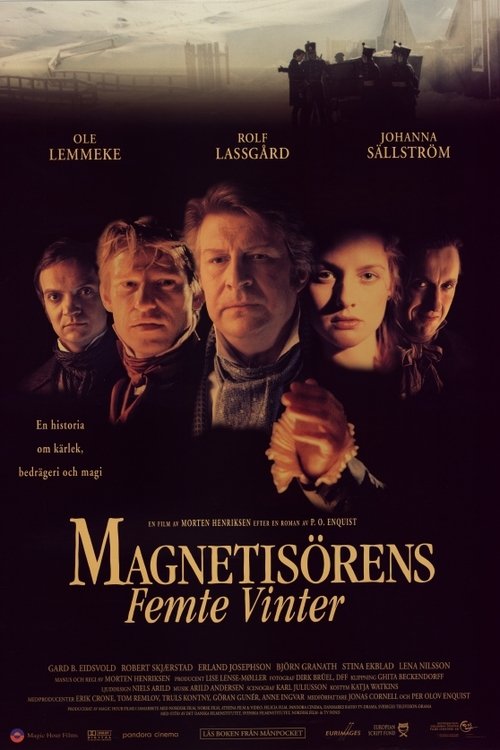
The Magnetist's Fifth Winter is a period drama that excels in psychological depth and the subversion of institutional hierarchies. By focusing on a character who challenges the medical establishment of 1820s Sweden, the film transcends simple historical reenactment to explore themes of empowerment and sensory perception. However, the film adheres to traditional narrative structures. The lack of diverse casting and the absence of non-straight narratives limit its broader social representation to its specific historical context. Ultimately, while the film provides a nuanced look at disability and female autonomy, it operates primarily as a conventional period piece regarding its broader social representation.
Category Breakdown
The story focuses on a heterosexual relationship between Maria and Meisner. There are no characters with LGBTQ+ identities or non-cisgender narratives in the plot.
Maria's journey from dependence to independence challenges the patriarchal norms of the 19th century. Her romantic decisions drive the emotional heart of the film.
Set in 1820s northern Sweden, the cast reflects the homogeneous demographics of the time. There is no indication of ethnic diversity.
The film critiques institutional authority by comparing traditional doctors with unconventional healers. It delves into moral complexity through repressed memories and hidden secrets.
Maria's visual impairment serves as a catalyst for her empowerment rather than just a tragedy. Her recovery of sight facilitates personal connections and advances the plot.
Present on Screen
Limited or Absent
Official Synopsis
A mysterious stranger, Meisner, arrives in a northern Swedish town in 1820, calling himself a magnetist - an amalgam of hypnotist and healer - and claiming he can cure diseases un-treatable by doctors. Ignoring the objections of his colleagues, Dr. Selander allows Meisner to cure his blind daughter, Maria, who not only regains her sight, but also falls in love with the charismatic magnetist. Dark secrets and repressed memories start to emerge, amidst the love between father and daughter, man and woman.
2002

2004

2010

2007
1998
1999
1995

2011
No reviews yet. Be the first to share your thoughts on this movie!
Use the rating form above to leave a star rating and optional review.