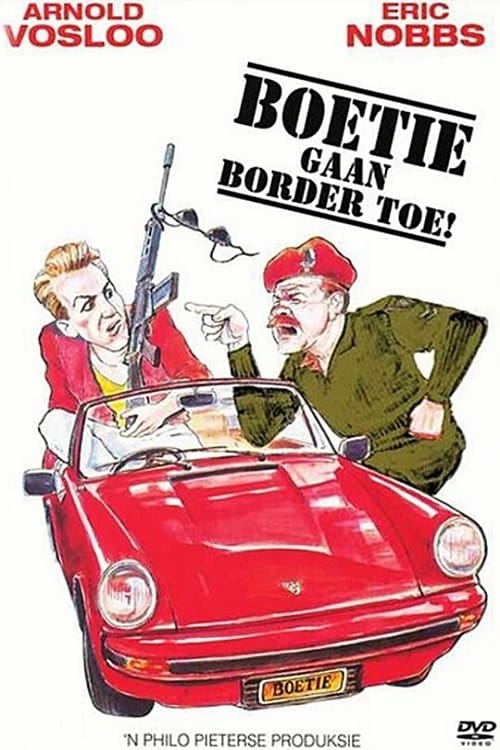
Boetie Goes to the Border
1984
No user ratings available yet
Diversity score: 1.5 out of 10
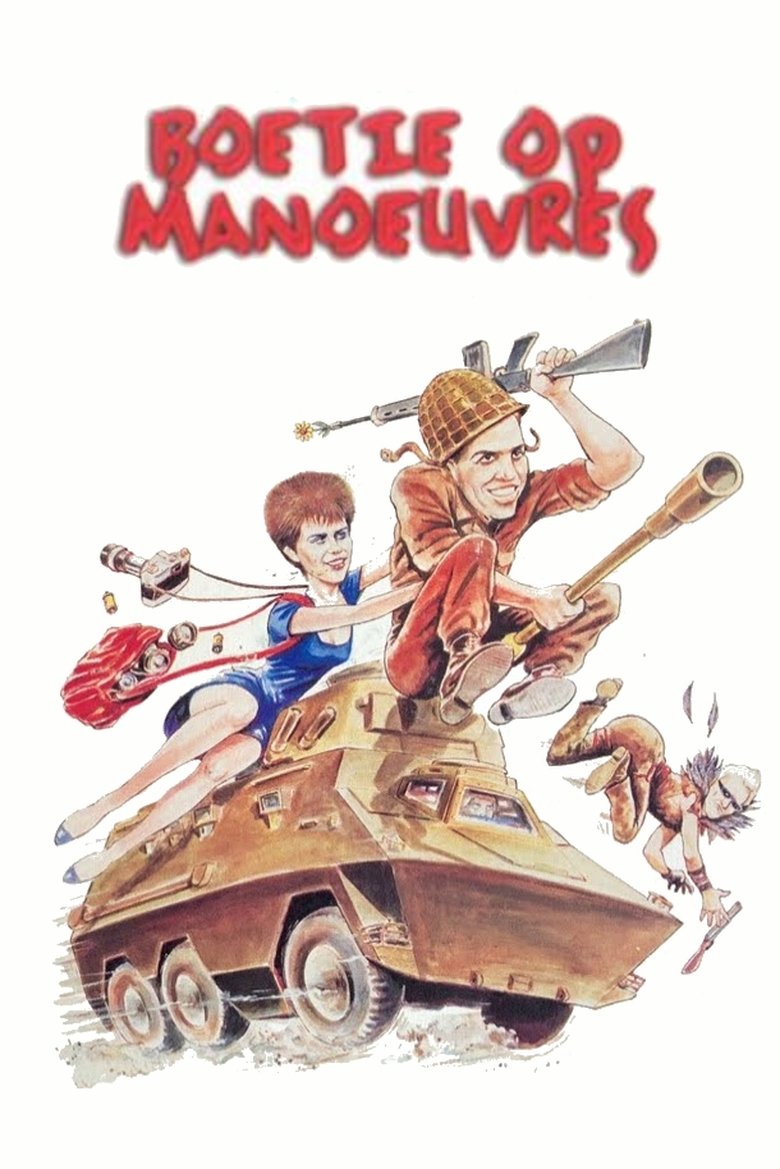
1985
Director
Regardt van den Bergh
Runtime
85 minutes
Average Rating
No ratings yetSynopsis
Military-Comedy. Sequel to "Boetie gaan border toe". Boetie (Translated into English as 'Buddy' or "Brother") wants to win his girlfriend Liza back, who just dumped him. With the help of some money, he engineers that she is assigned as reporter to the planned manoeuvres, where he would love to impress her. However, things turn out different as Buddy and his comrades are assigned to do the manual labour during the manoeuvres, and the arrogant Captain humiliating them turns out to be Liza's new boyfriend. But when a bunch of criminal madmen disturb the manoeuvre and take a hostage, it is up to Buddy and his comrades to rescue the hostage, their honour - and the girl's love.
Overall Score
Minimal
Category Breakdown
LGBTQ+ Representation
The film centers on a traditional heteronormative romantic pursuit. The plot focuses on the protagonist's attempt to reclaim a female partner, offering no evidence of non-cisnormative identities.
Gender Representation
Gender roles are strictly traditional. While Liza works as a reporter, she serves primarily as a romantic prize and a catalyst for the male protagonist's development.
Racial & Ethnic Diversity
The narrative reflects the homogeneous social structures of 1985 South Africa. It lacks intersectional casting or any disruption of the era's prevailing racial demographics.
Religious & Cultural Diversity
The story emphasizes military honor and institutional loyalty. It reinforces traditionalist views of masculinity and social order through physical heroism.
Disability Representation
There is no mention of characters with visible or invisible disabilities. No information is available to assess this category.
Strengths
Areas for Improvement
AI Analysis
Wild Maneuvres is a conventional military comedy that reinforces established social and gender hierarchies. The narrative relies on outdated tropes of romantic pursuit and masculine heroism to drive its plot. The film lacks meaningful representation of marginalized groups, adhering to the homogeneous social structures of mid-1980s South African cinema. It prioritizes traditionalist values and institutional stability over diverse perspectives. Ultimately, the work functions as a genre piece that maintains the status quo rather than challenging or expanding social boundaries.
1984
1935

1978
2011

1977

2015
1961
1977
1982
1940
1987

1967
No reviews yet. Be the first to share your thoughts on this movie!
Use the rating form above to leave a star rating and optional review.