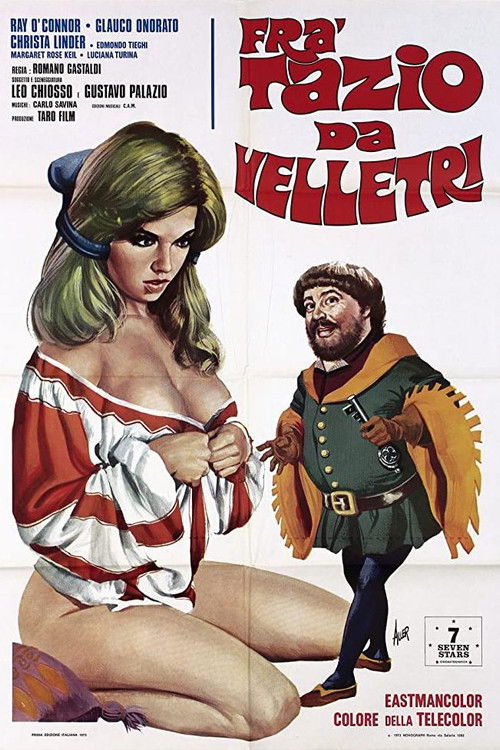
Fra' Tazio da Velletri
1973
No user ratings available yet
Representation score: 1.8 out of 10
Representation Score
Fair
1973
Director
Bitto Albertini
Runtime
85 minutes
Average Rating
No ratings yetNew Showbiz Analysis
Bitto Albertini’s comedy subverts the medieval social and legal order by prioritizing individual desires and unconventional emotional bonds over rigid moralism. The film gains narrative interest by using a pilgrim saint to disrupt conventional social expectations, providing a comedic yet unique departure from traditional romantic and spiritual clichés. However, the film lacks modern breadth in terms of race, ethnicity, and disability, remaining confined to a localized European context and traditional gender dynamics.
Category Breakdown
The film features a pilgrim saint who is in love with the male protagonist, creating an emotional bond that challenges traditional romantic expectations. This bond serves as a mechanism for salvation.
Gender dynamics revolve around infidelity and scandal. The mayor's wife drives the plot through her clandestine affair, but her actions are framed more by the scandal than a subversion of traditional gender roles.
The film reflects the historical and geographic context of a 1973 Italian production set in the fourteenth century. The narrative centers on a localized European social structure, lacking diverse racial and ethnic representation.
The story critiques institutional authority by focusing on a protagonist who defies civic and religious laws. Themes of moral relativism challenge the rigid moralism of the time.
There is no evidence of the portrayal of physical or neurodivergent disabilities within the narrative.
Present on Screen
Limited or Absent
Official Synopsis
Ricciardetto is a fourteenth-century playboy who wants at all costs to sleep with the wife of the mayor of Montelupone. He succeeds, but is caught between the covers with the woman and sentenced to death. He will be saved by a kind of pilgrim saint who is in love with him.
1973
1971
1973
1973
1972

1972
1982
1970
No reviews yet. Be the first to share your thoughts on this movie!
Use the rating form above to leave a star rating and optional review.