Find another title
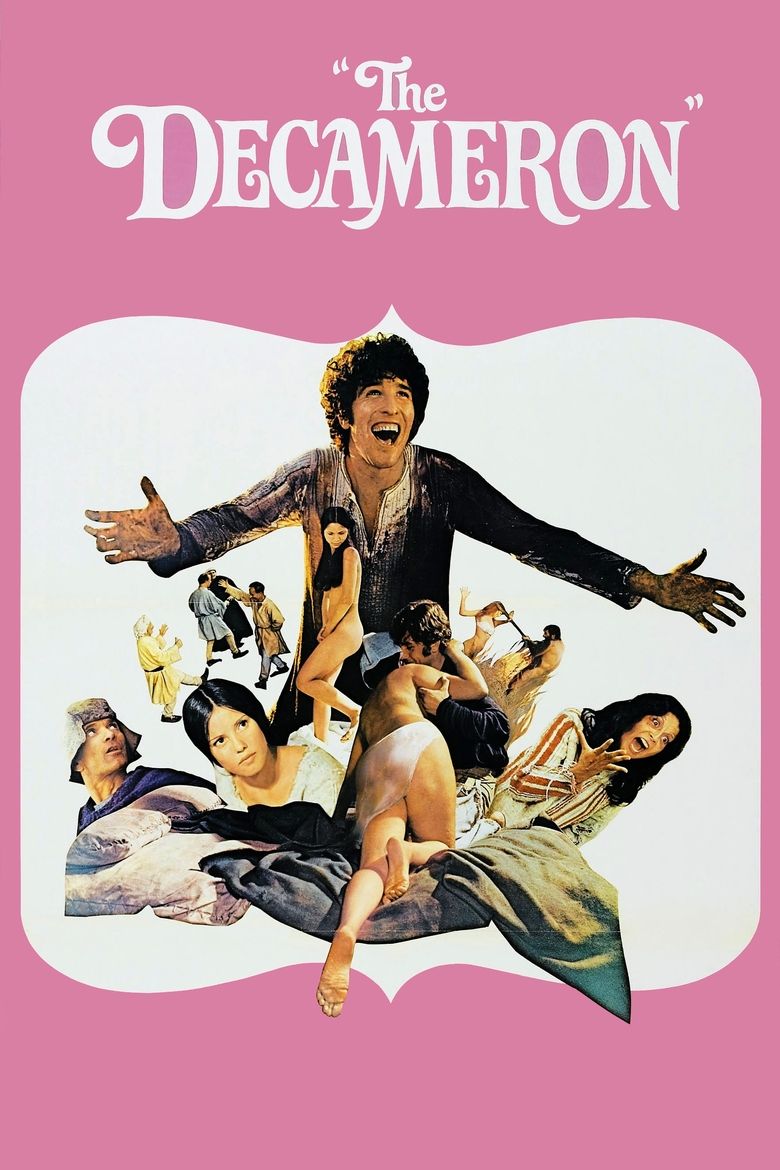
The Decameron
1971
RDirector
Pier Paolo Pasolini
Runtime
111 minutes
Average Rating
No ratings yetSynopsis
A young Sicilian is swindled twice, but ends up rich; a man poses as a deaf-mute in a convent of curious nuns; a woman must hide her lover when her husband comes home early; a scoundrel fools a priest on his deathbed; three brothers take revenge on their sister's lover; a young girl sleeps on the roof to meet her boyfriend at night; a group of painters wait for inspiration; a crafty priest attempts to seduce his friend's wife; and two friends make a pact to find out what happens after death.
Where to Watch
Diversity & Representation
Overall Score
Good
Category Breakdown
LGBTQ+ Representation
The film prioritizes carnal impulse and sexual liberation over rigid heteronormative structures. While explicit same-sex narratives are not the central plot driver, the subtext challenges traditional pairings. Sexuality is presented as a fluid, vital human necessity.
Gender Representation
Women are portrayed with high agency, acting as architects of their own pleasure. They frequently drive comedic subversion rather than serving as passive subjects. This disrupts conventional medieval gender hierarchies and patriarchal constraints.
Racial & Ethnic Diversity
The film reflects the demographic realities of 14th-century Italy. It avoids homogeneous nobility tropes by emphasizing the physical presence of various social classes. However, it lacks intentional intersectional or multi-ethnic casting.
Religious & Cultural Diversity
The narrative offers a profound critique of Western institutions by prioritizing secularism over religious piety. It portrays the Church with ribaldry and indifference. The film celebrates a primitive humanism over Christian dogma.
Disability Representation
Physical differences, such as a character posing as a deaf-mute, serve as narrative devices for social subversion. These portrayals facilitate humor and plot movement rather than exploring deep neurodivergence or chronic illness.
Strengths
- Disrupts patriarchal constraints by presenting women as active, intelligent, and sexually autonomous participants.
- Challenges religious and social hierarchies through a sophisticated critique of traditional Western institutions.
- Emphasizes a liberated, humanistic perspective that prioritizes individual pleasure over rigid moral dogma.
Areas for Improvement
- Lacks intentional intersectional or multi-ethnic casting, reflecting a limited 14th-century Italian demographic.
- Uses physical disability primarily as a narrative device for humor rather than deep character exploration.
- Does not feature explicit same-sex narratives as a central driver of the episodic plots.
AI Analysis
Pasolini’s direction replaces an ordered world with a chaotic, liberated landscape. The film succeeds by deconstructing traditional authority and celebrating individual agency against systemic religious and social constraints. It rejects singular moralities in favor of complex, situational ethics. The strength of the work lies in its rejection of institutionalized morality. By focusing on the shared human condition of the peasantry and urban classes, it disrupts the conventional expectations of the historical drama genre. However, the film remains tethered to its era's demographic limitations and uses disability primarily as a comedic tool. While it challenges social hierarchies, it does not provide explicit representation for many modern identity frameworks.
Rate this Movie
Reviews
No reviews yet. Be the first to share your thoughts on this movie!
Use the rating form above to leave a star rating and optional review.