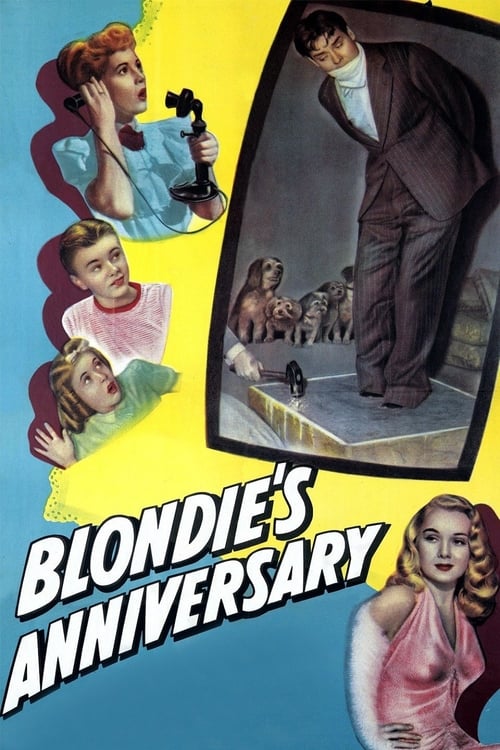
Blondie's Anniversary
1947
No user ratings available yet
Representation score: 1.8 out of 10
Representation Score
Minimal
1946
PassedDirector
Abby Berlin
Runtime
72 minutes
Average Rating
No ratings yetNew Showbiz Analysis
Blondie's Lucky Day is a mid-century domestic comedy that largely upholds the social norms of its time. The story centers on a traditional nuclear family, offering limited space for diverse identities. While the film lacks racial and LGBTQ+ diversity, it does introduce a notable female character, Mary Jane McDermott, who demonstrates professional competence and business acumen. However, her role is still tied to triggering domestic jealousy. Overall, the film adheres to conventional comedic structures that support established social hierarchies and economic stability.
Category Breakdown
The film focuses on a typical heterosexual family unit without any representation of LGBTQ+ identities or critiques of heterosexuality.
Blondie serves as the emotional center of the household, while Mary Jane McDermott stands out by showing strong professional skills in business.
The story revolves around a predominantly white cast, lacking multi-ethnic representation.
The narrative emphasizes traditional Western social norms and mid-century capitalist values, with conflicts arising from personal emotions rather than broader societal critiques.
There is no mention of characters with visible or invisible disabilities in the film's description.
Present on Screen
Limited or Absent
Official Synopsis
Not only must Blondie put on a brave face when her husband Dagwood is fired for the umpteenth time by Mr. Dithers, but she must also tolerate the attention paid to Dagwood by pretty WAC Mary Jane McDermott. A whiz in business matters, Mary Jane sets up Dag in his own business, which replenishes the Bumstead coffers but which drives Blondie into a jealous frenzy.
1947
1947
1948

1946
1950
1947
1946
1945
No reviews yet. Be the first to share your thoughts on this movie!
Use the rating form above to leave a star rating and optional review.