
Darkness, Light, Darkness
1990
No user ratings available yet
Representation score: 0.6 out of 10
Representation Score
Minimal
1996
16+Director
Jan Švankmajer
Runtime
16 minutes
Average Rating
No ratings yetNew Showbiz Analysis
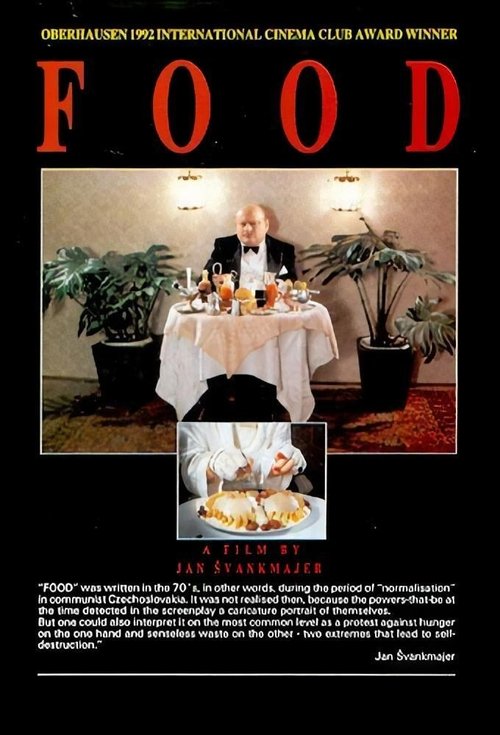
Jan Švankmajer’s *Food* is a surrealist exploration of consumption that replaces human actors with organic matter and objects. This choice shifts the focus from individual identity to the systemic, often violent processes of eating and destruction. While the film scores low on traditional demographic metrics, it provides significant intellectual value. It functions as a postmodern critique of Western culinary traditions and capitalist consumption patterns. Ultimately, the work trades human representation for a profound deconstruction of societal rituals, framing the act of eating as a primal, industrial necessity rather than a civilized social grace.
Category Breakdown
The film lacks human characters entirely. Consequently, there are no depictions of sexual orientation or gender identity.
The narrative relies on inanimate objects and organic matter. It avoids traditional gender hierarchies but lacks any gendered ability to act or clichés.
The setting exists in a timeless, ahistorical vacuum. By eschewing human subjects, the film avoids racial stereotypes and diverse casting.
The film offers a sharp critique of Western consumerist structures. It portrays dining as a mechanical, dehumanizing, and ritualistic cycle of destruction.
There are no depictions of neurodivergence or physical disabilities. The cast is comprised solely of food and inanimate objects.
Present on Screen
Limited or Absent
Official Synopsis
Examines the human relationship with food by showing breakfast, lunch, and dinner.
1990
1988

1989
2001
1988
1997
1983

1968
No reviews yet. Be the first to share your thoughts on this movie!
Use the rating form above to leave a star rating and optional review.